Volvo and Innovation: Today, Tomorrow, and the Future

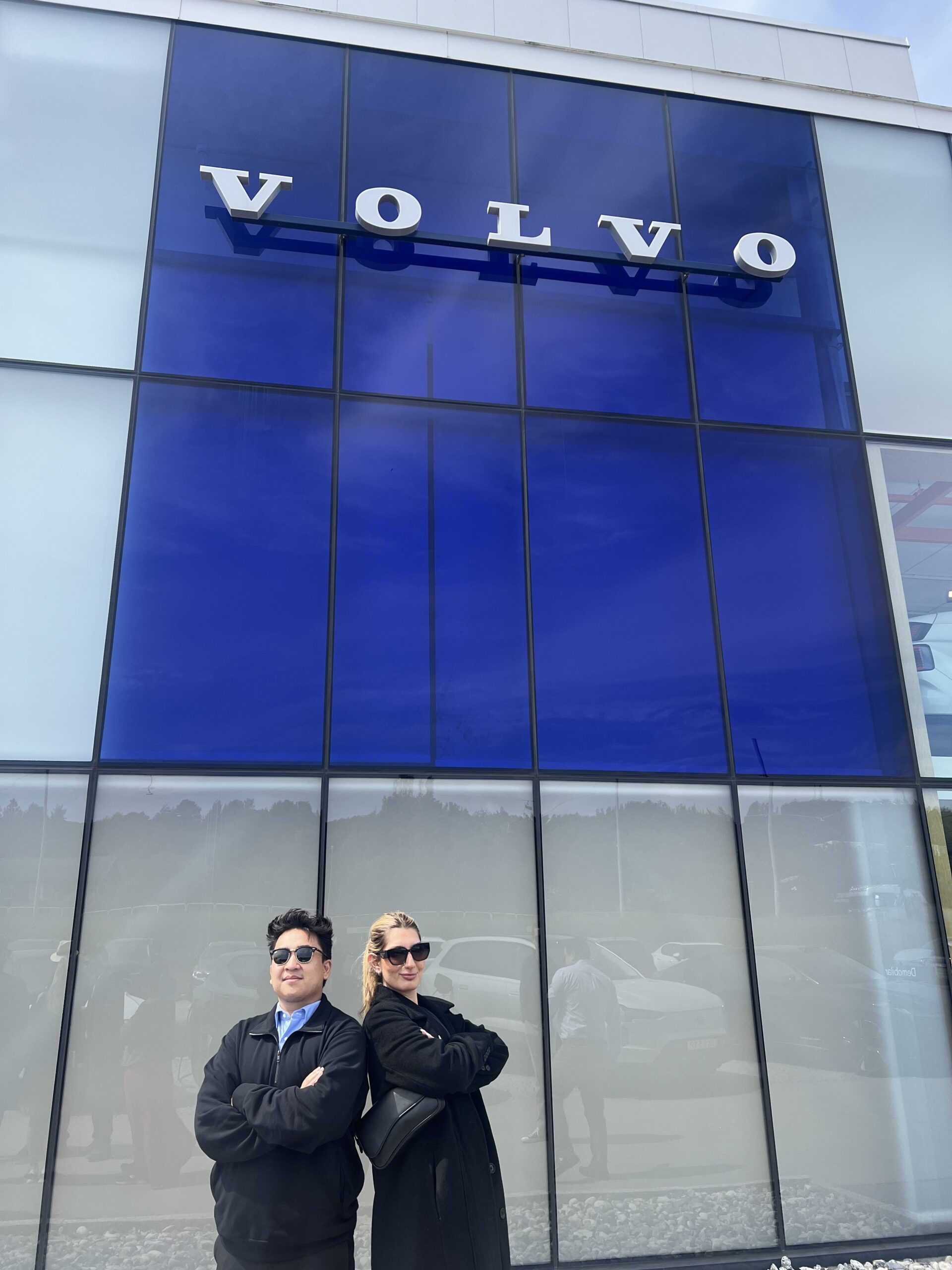
Hey everyone! Earlier this week, we had an amazing experience while visiting Volvo headquarters, or what they call the “nest.” We got to meet some lovely and smart people working at Volvo. We were impressed with one person’s presentation, specifically, Alexander’s presentation about the future of Volvo. It was quite interesting to hear that his department is named “innovation.” When we both heard that, we thought to ourselves that it was a unique department name. After hearing Alexander’s presentation, we understood why his department was named that. We were both blown away by how much Volvo is considering looking into the future of the automotive industry.

Alexander’s presentation was mainly a group discussion that started by showing which brands we, as consumers, use as a daily service. For example, we use Netflix, Uber, Airbnb, and Waymo as mobile service platforms. We use all those services by booking them via a mobile app on your smartphone. Then Alexander dove into Uber and Waymo, since both platforms use cars for their services. He then showed us some data showing us that in the future, not many people will care about owning a car. For various reasons, such as high costs to maintain a car, insurance payments, multiple car payments, and traffic, people feel like they no longer want to own a car. Instead, Alexander proposed that many consumers in the future will be using Waymo and other car service models as their main transportation. That blew our minds because we could never think of not owning a car in California. Many others in our group felt this way as well. We thought, “How could this be possible? We love owning our cars.” However, after seeing more data and conversing with Alexander, it all makes sense now, and I agree with Alexander’s statements. We could see ourselves in about 15-20 years down the road, getting rid of our cars and using Waymo to get to places. Our only concern was the availability of Waymo and other services, such as Tesla’s taxi service, being available 24/7. As of now, we think Uber takes too long to find us a driver to take us to other locations. However, Alexander claimed that Volvo and other car manufacturers will have a large fleet readily available for consumers to order at any time.

We had a few questions for Alexander about how the American market would react to this reality. As we know, Americans are less accepting of change, and this proposition by Alexander is a huge change for Americans. Americans take pride in owning items such as cars, houses, and phones, to name a few. I think other countries, such as China, Japan, and Europe in general, are more accepting of this idea, but Americans will take a long time to adapt and accept this change in the future. Another question we have for Alexander is how this will affect the production of cars. Will this increase, decrease, or keep the same amount of production of cars made per year? Also, will Volvo and other car manufacturers need to build self-driving cars like what Jaguar did with Waymo? If that happens, how will that affect the Uber driver market? All those questions will need to be figured out before implementing these new ideas.

Transitioning to the manufacturing side of Volvo, we got to go on a tour of the Volvo manufacturing plant, where we got to see the different functions of each section of the factory. Each section had multiple robots assigned to each component or task in terms of building the Volvo car. We even got to see robots driving other car parts to different sections of the factory. It’s incredible how far car manufacturing has come since the 1900’s to where it is now. While we don’t see a lot of humans working in the factories, we still see lots of humans inspecting and making sure the robots are performing to the highest level. The Volvo group leader informed us that each car built in the factory is custom-built. From a human perspective, we think that having robots build the cars, it reduces the amount of injuries and fatalities in the factory because human error is inevitable. While robots are “taking our jobs,” it’s for human safety and efficiency.

Overall, we truly enjoyed our experience at Volvo with all their new ideas coming down the road and the efficiency of how manufacturing has transformed with robots. We both were very interested in working for Volvo and even asked if they were hiring, but Volvo is in a hiring freeze. However, we are still interested in working for other automotive companies because it is an exciting industry where there are many changes in trends, and Marketing and other departments have to adapt quickly to those changes. It was a great experience, and we hope our paths cross in the future! See you all soon 🙂

A Tour, A Gripen, & An Unexpected Career Interest

Our morning at Saab Technologies in Stockholm has by far been my favorite business visit throughout our tour in Scandinavia. I walked in expecting a polished corporate tour and walked out genuinely contemplating about my own future and if it could potentially be here in Stockholm. Our host, Peter Engberg, gave us a tour that moved between hardware, history, and the kind of company culture that is hard to fake.

Peter began with the backstory and it reframed everything we saw afterward. Saab was founded in 1937 in Trollhättan as Svenska Aeroplan Aktiebolaget. Tensions rose across Europe and Sweden wanted to build its own military aircraft rather than depend on foreign suppliers. That mission of self-reliance still runs through the entire company nearly ninety years later.

What surprised me is how much sits under one roof. Most people outside Sweden remember the Saab car brand, but that was only the first chapter. The defense and aerospace side produced legendary fighter aircrafts such as the Draken, the Viggen, and today, the Gripen. They also produced submarines, radars, and ground systems. Through acquisitions such as Bofors and Kockums, parts of Saab’s heritage trace back centuries.

My favorite piece was the Gripen. Seeing it presented on Saab’s huge display wall, with the design philosophy explained alongside it, made the engineering feel tangible. Peter described how the aircraft was built to operate from short civilian roads and turn around quickly with a small ground crew which is practical and clever choices were driven by Sweden’s geography and defense.

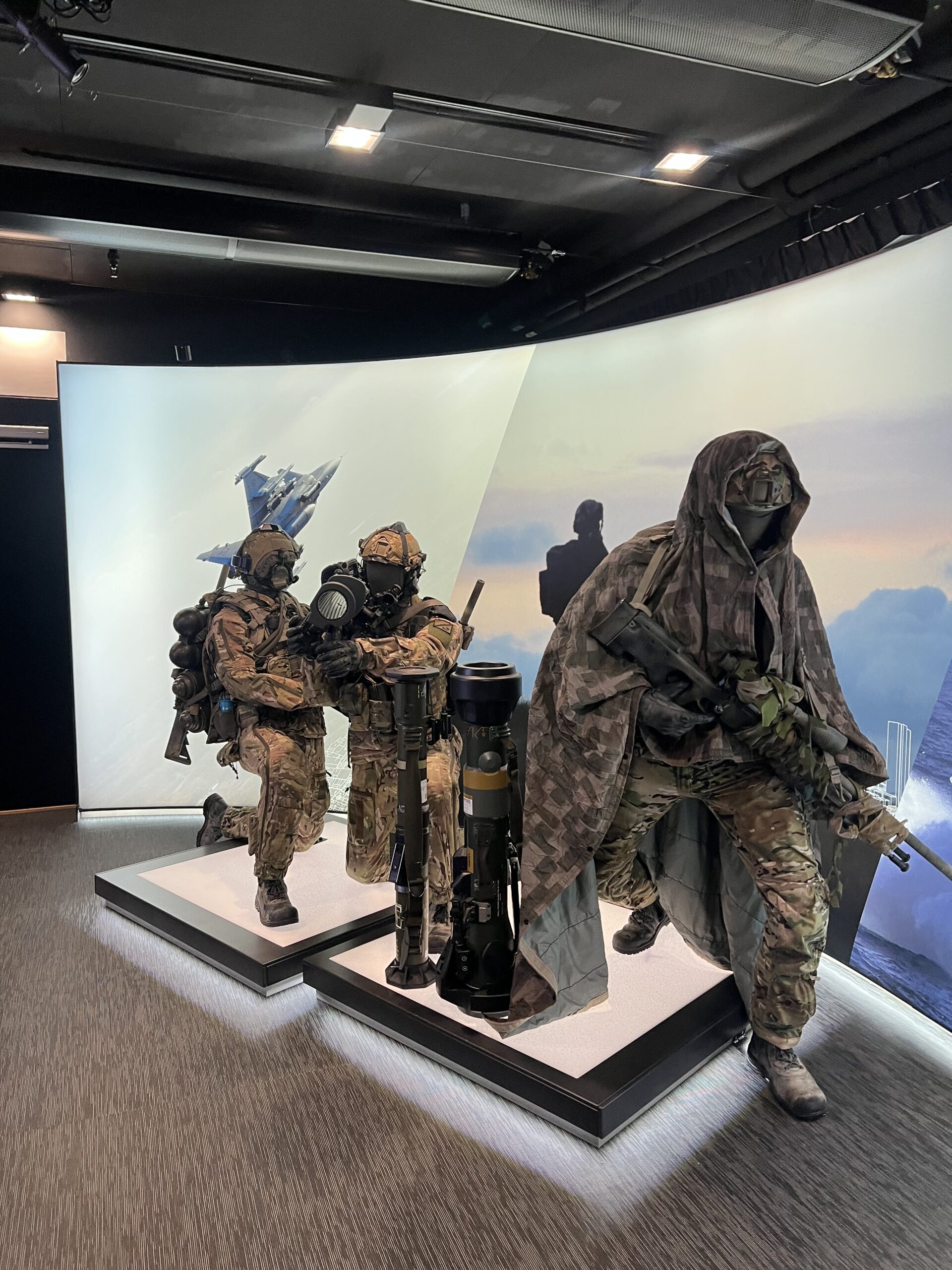
The land systems were just as impressive. The display of soldiers in the field showed Saab’s shoulder-fired systems in context, including the Carl-Gustaf, which has been in service around the world for decades. Beyond the technology, what pulled me in was the company itself. Saab has a strong identity, a long story, and products it can stand behind which is exactly the kind of brand I’d love to help tell from the sales and marketing side. Communicating something this technical to the right audiences is a real challenge, and one I find genuinely exciting.

Thank you to Peter for the time and the thoughtful tour. This is a company I’ll be keeping a close eye on.

Saab in Sweden: Neutral No More

Walking into Saab’s showroom, the first thing I noticed was the hardware. The Gripen with the Swedish flag on the tail. Across the room, a T-7A Red Hawk in USAF livery. Two aircraft, two very different customers. Before coming to Sweden, I … [Continue reading]

Skelleftea Day 1: The Hub of Creative Minds

We had just spent a couple days in Northern Sweden, particularly the small town of Skelleftea, and this may have been the closest me and Henry have experienced being nearest to the Arctic Circle since I don't remember my Cruise to Alaska at less than … [Continue reading]

What Will Campus Look Like in 2076? A Day in SkellefteĂĄ Got Me Thinking

Hej! There’s something kind of wild about sitting in a room full of strangers — academics, business people, city planners, students — and being asked one simple question: What is a campus actually for? That’s exactly what happened today in … [Continue reading]

PlacexNordic Conference & Skelleftea

Hi world! We are reporting from Stockholm inside the Radisson Blu hotel. We wanted to share our thoughts about the conference that we attended, as well as the city of Skelleftea itself. Overall, we liked coming to the northern part of Sweden, where … [Continue reading]

What We Should Learn to Prepare For a Better Future?

Hello Readers,I am Rose Nguyen, and my teammate Donald and I are both MBA students at Chapman University in the USA. Along with our professor, Niklas, and our fellow MBA classmates, we are participating in a study abroad course at Campus SkellefteĂĄ … [Continue reading]

The 2076 Campus SkellefteĂĄ Evolution

Tucked in the northern reaches of Sweden, the city of SkellefteĂĄ carries an energy that feels quietly ahead of its time. Today, our cohort visited SkellefteĂĄ University for a workshop unlike anything I had experienced in a traditional classroom … [Continue reading]

18 Hours and 9 Time Zones: Orange County to the Arctic Circle

By Henry Carey, with more to come from Matt Ho. I left Orange County’s freeways, strip malls, and donut shops behind on May 30, and didn’t stop moving for 18+ hours. A transatlantic flight, a layover in Stockholm, then one final short hop north. … [Continue reading]

The Land of the Midnight Sun: Study abroad Scandinavia 2026 course

Hello readers, Donald and Rose are here live in Sweden currently. We are eager to introduce ourselves to the community. We our both in the Chapman MBA Flex program. Our blog name is Sunshine, and we are looking forward to shine some light on our time … [Continue reading]