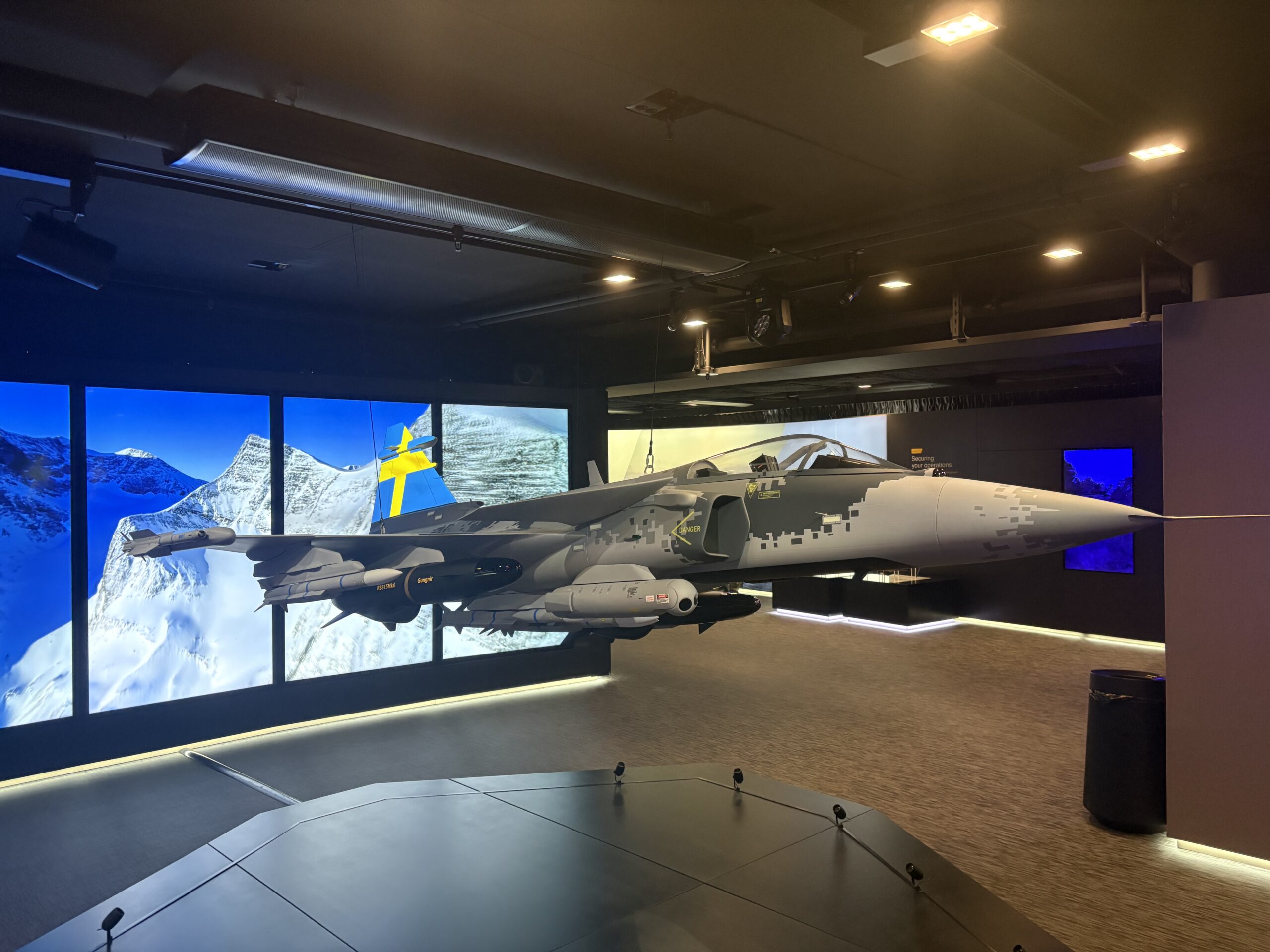
Walking into Saab’s showroom, the first thing I noticed was the hardware. The Gripen with the Swedish flag on the tail. Across the room, a T-7A Red Hawk in USAF livery. Two aircraft, two very different customers.
Before coming to Sweden, I knew of Saab through the cars. That brand was sold off years ago, and today Saab AB is purely a defense and security company — aeronautics, weapons, sensors, submarines. The focus is deliberate, and the timing turned out to be fortunate.
Russia’s invasion of Ukraine in 2022 changed defense spending across Europe almost overnight. NATO members who had coasted on thin defense budgets for decades suddenly had political cover — and political pressure — to spend. Sweden itself joined NATO in 2024, ending over 200 years of formal neutrality. For Saab, this wasn’t just a geopolitical shift; it was a business inflection point. Orders surged. In Q1 2026, the company posted nearly 24% organic sales growth year-over-year, with a backlog approaching $30 billion. A few years ago those numbers would have been hard to imagine.
The Gripen E pictured above become an increasingly attractive option for countries that want a capable fighter without full dependence on the US. Colombia signed a €3.1 billion deal for 17 Gripens in late 2025. Thailand added more to its existing fleet. Canada is reportedly exploring whether to run Gripens alongside F-35s as a hedge against supply chain dependence on American manufacturers. The geopolitical mood is working in Saab’s favor.
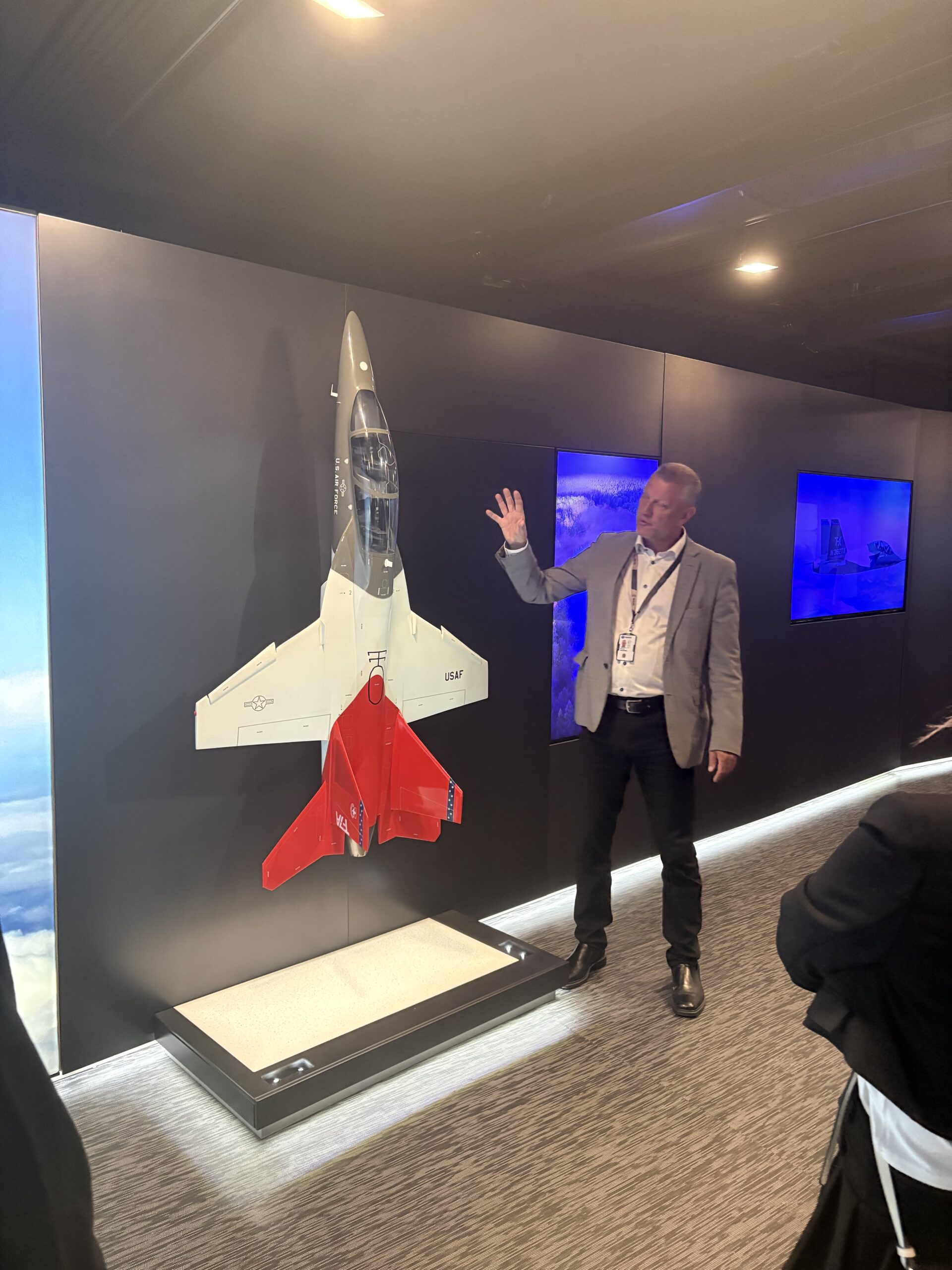
The T-7A Red Hawk on the other wall tells a complementary story. A joint program with Boeing, built to replace the USAF’s T-38 trainer that’s been flying for over sixty years — and Saab builds the fuselage in Indiana. The program has had delays, but more than the revenue, it’s a credibility signal. A seat at the table in American pilot training opens a lot of other doors.
What struck me standing in that room was how well the pieces fit together. A company that made a deliberate bet on specialization instead of being a “jack of all trades” conglomerate, headquartered in a country that just joined NATO, selling to a world that suddenly decided defense mattered again. Not every business gets that kind of tailwind.