During this week of our trip, we visited two of Sweden’s powerhouses, Volvo and IKEA.
We started at Volvo Cars’ headquarters, known as the “Eagle’s Nest,” for a session on innovation and supply chain transformation, followed by a tour of the factory floor. Walking into a building with that kind of nickname, you expect a certain amount of corporate theater. What we got instead was a surprisingly grounded conversation about how a company tries to stay competitive while completely rethinking how it builds cars.
What stuck out to me the most was our talk about innovation. We were presented with the scenario in which 75% of the world is transported by autonomous vehicles, and the other 25% own their own transportation. This stuck out to me because it shows how a company is trying to remain competitive in its space. The scenario addresses the uncertainty surrounding the rise of AI and the direction a company like Volvo should move towards. I can only imagine what other people from other countries would feel about this. Coming from America, we rely heavily on our cars to get from point A to point B, so how receptive would people in the U.S. be? It was interesting to get insight from my fellow classmates.
Then we took a tour of the factory floor. Seeing the actual assembly process — the precision, the choreography between human workers and machines — made the morning’s strategy conversation feel a lot less abstract. On the floor, it looks like thousands of small, deliberate decisions about efficiency, safety, and waste, repeated constantly.

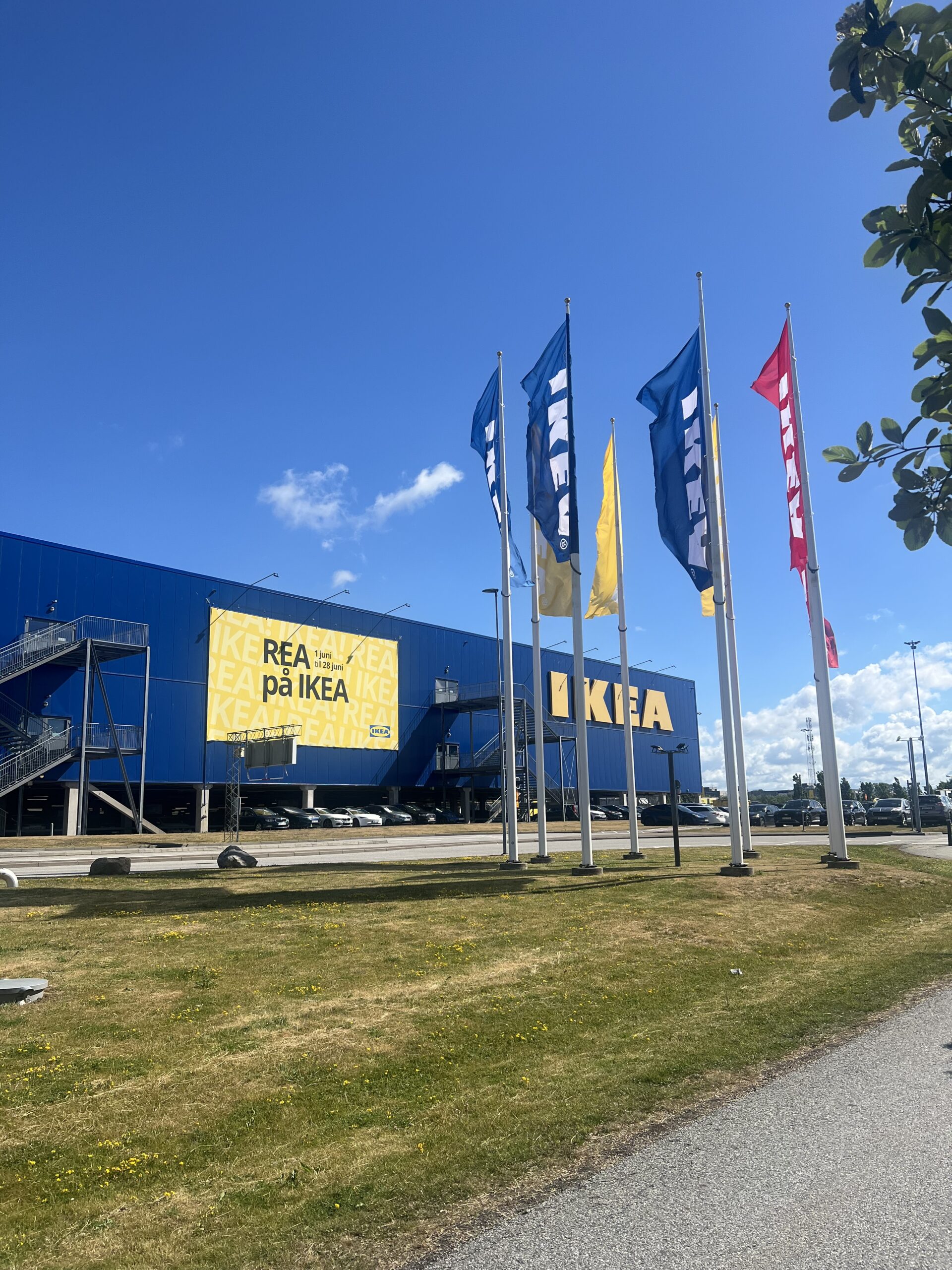
Ikea was a different kind of visit. We met with Katherine Holwick, Community Leader at IKEA Malmö, who walked us through what that role actually means day to day. I went in assuming “community leader” was a soft title, something adjacent to marketing. I left with a much better understanding of how seriously Ikea treats its relationship with the cities it operates in.
Katherine talked about Ikea’s approach to local engagement — not just selling furniture, but actually being embedded in the neighborhoods around its stores. That includes everything from sustainability initiatives to social programs designed around the specific needs of a given community. It was a good reminder that a company this size doesn’t operate in a vacuum; every store is also a relationship with a local population, and Ikea seems to treat that relationship as something worth investing in deliberately, not just as good PR.
Looking back at everything — Skellefteå, Stockholm, Gothenburg, Malmö, the workshops, the company visits, even the horse races and the football match squeezed in between — there’s a thread that’s followed us the whole way, even when nobody was explicitly pointing it out.
Almost every company and institution we visited talked about the future in decades, not quarters. The campus workshop in Skellefteå asked us to think fifty years ahead. Saab built a business that’s been shaped by self-reliance for nearly ninety years. Volvo is mid-transformation on a bet that won’t fully pay off for years. Ikea is investing in communities with no immediate return beyond just being a good neighbor. None of it felt rushed, and none of it felt performative.
I don’t think that’s a coincidence, and I don’t think it’s unique to any one of these companies. It feels like something closer to a cultural default here — a baseline assumption that building things to last is just what responsible institutions do, whether that’s a piece of furniture, a fighter jet, or a curriculum. It’s not loud about it. Nobody stood up and gave a sustainability pitch. It just showed up in how everything was planned.
I keep thinking about what that mindset would look like exported elsewhere — back home, in industries that are used to optimizing for the next earnings call instead of the next half-century. I don’t think the answer is to copy it wholesale; context matters, and Sweden’s got its own advantages that don’t translate everywhere. But there’s something here worth paying attention to, even if it’s just the discipline of asking “will this still make sense in fifty years?” before committing to anything.
That question followed us from a classroom in Skellefteå to a museum in Stockholm to a factory floor in Gothenburg to a furniture store in Malmö. It’s probably the most useful thing I’m taking home.