Saab Technologies
I didn’t expect a company visit to be one of the most memorable parts of this trip, but our stop at Saab Technologies in Stockholm ended up sticking with me more than I thought it would.
Saab isn’t a company most Americans think about day-to-day, but in Sweden it’s almost a household name. This is a company building fighter jets, radar systems, naval vessels, and surveillance technology that countries around the world depend on. This is a company that builds products designed to keep people safe at the national level.
We were lucky enough to meet with Peter Engberg, Saab’s Vice President and Head of Strategy and Portfolio. Peter gave us a presentation on how the business is structured, the different areas it operates in, and how a company like this approaches strategy when your customers are mostly governments and your timelines stretch across decades, not quarters. So much of what we study in business school is built around speed: fast iteration, fast growth, fast decision-making. Saab operates on a completely different clock.
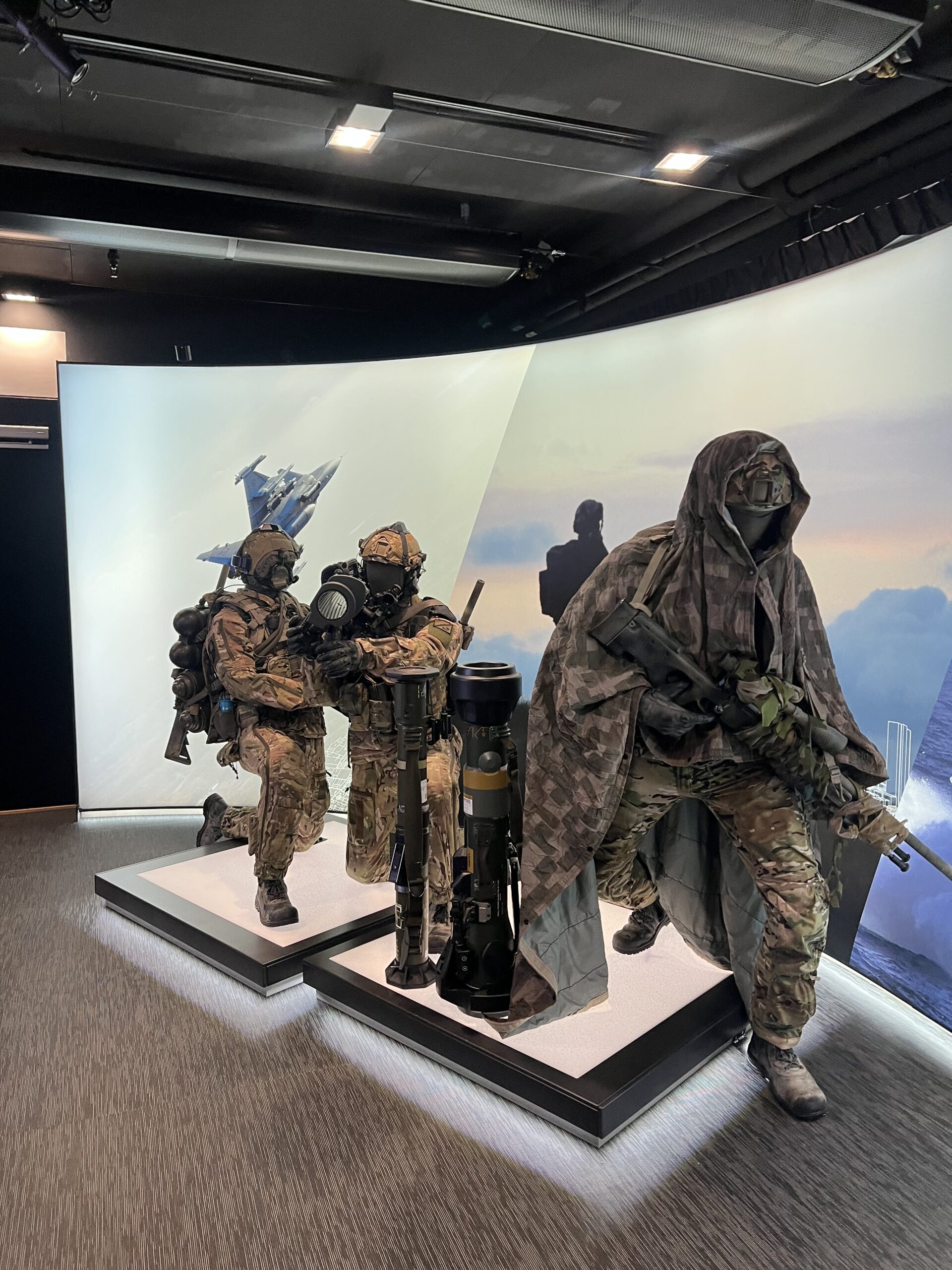
Peter walked us through Saab’s exhibition, which was honestly my favorite part (I am a visual learner). Seeing scale models and displays of the systems Saab builds — aircraft, radar, naval tech — made the company feel a lot less abstract. It’s one thing to read about a “global defense and aerospace company” in a case study. It’s another to stand in front of a model of something that’s actually deployed somewhere in the world right now, doing exactly what it was designed to do.
Roleplaying as a Swede
Throughout our trip in Stockholm, the class and I immersed ourselves in the city; partaking in all types of activities.
We happened to be in Sweden for their National Day, which gave us a front-row seat to a side of the culture you don’t get from a business tour. Flags, traditional dress, public celebrations- it was a nice reminder that this trip isn’t just about conference rooms and meetings. Even the celebration itself felt understated and low-waste compared to how big public events back home tend to go.
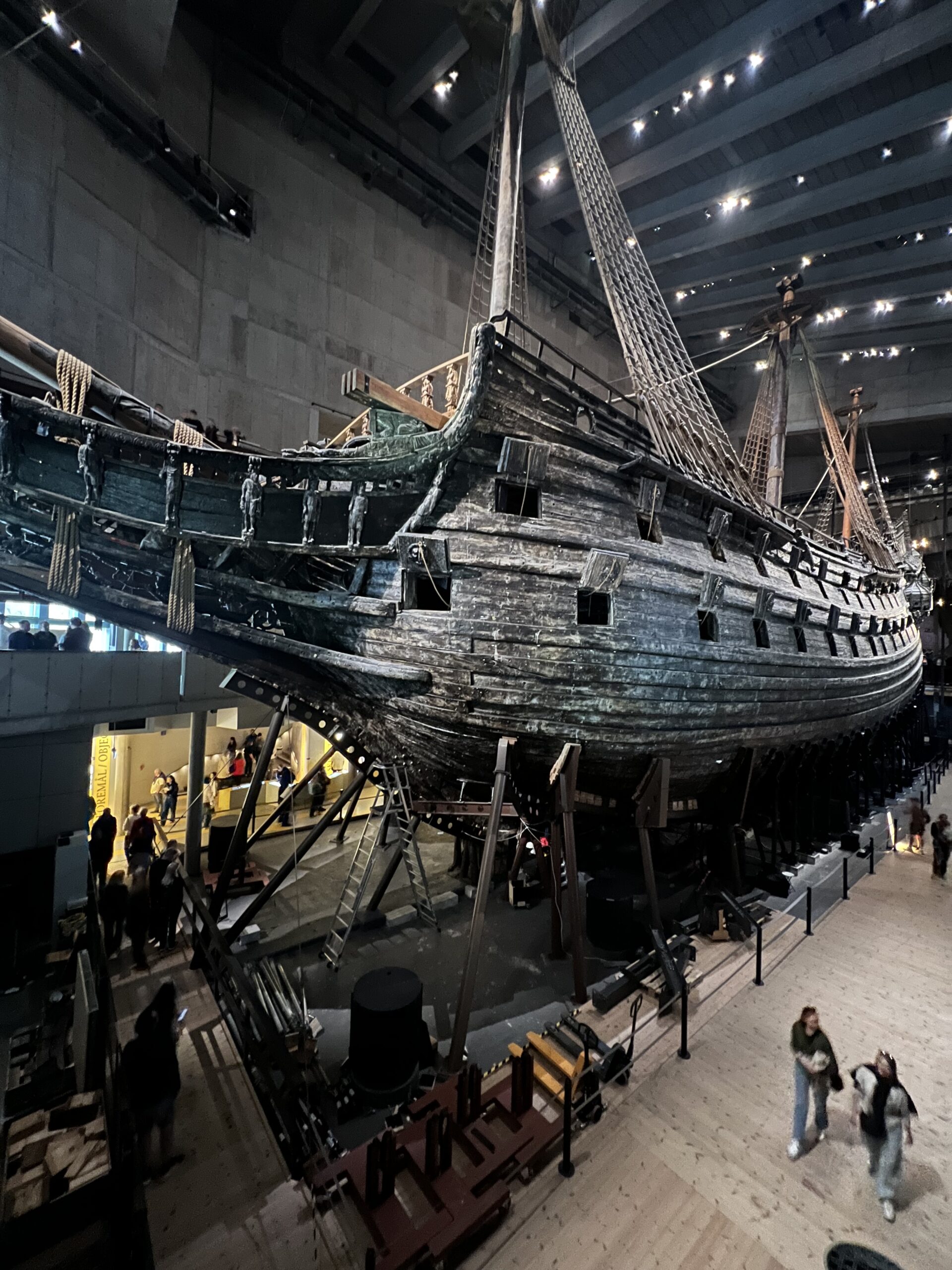
The Vasa Museum started off our day, and it might be the most unique museum I’ve ever walked through. The Vasa is a 17th-century warship that sank on its maiden voyage in 1628 and stayed at the bottom of Stockholm’s harbor for over 300 years before being recovered almost fully intact. Standing in front of the actual ship, not a replica, was a strange kind of time travel. The museum’s preservation effort itself was kind of remarkable too — keeping a 300-year-old wooden ship from deteriorating any further is its own quiet lesson in long-term thinking, which feels like a theme that keeps following us around Sweden.
The horse races were a fun curveball. Not something I expected to do on a study abroad trip, but it turned into one of the more electric, social afternoons of the week.
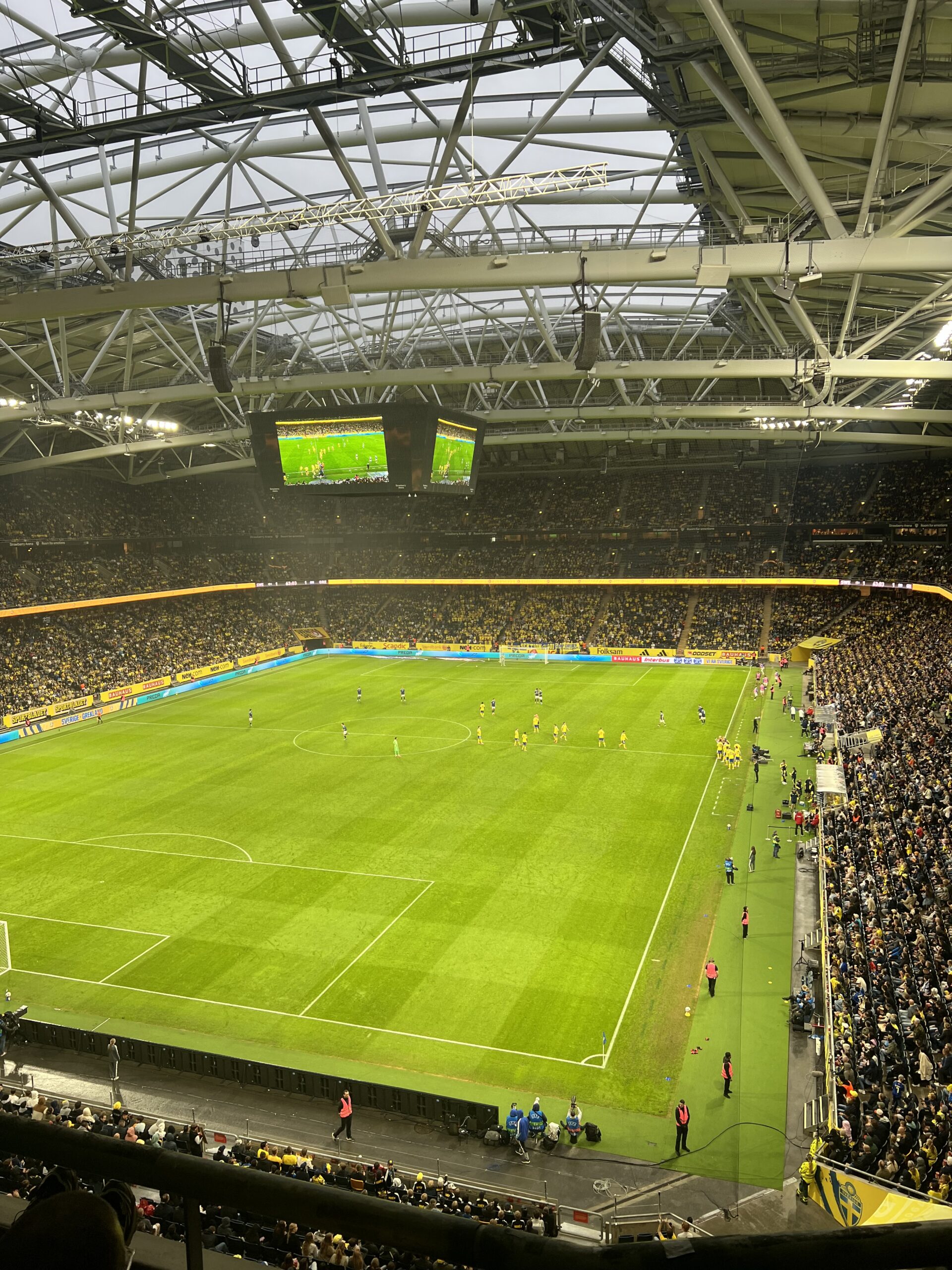
We also caught a World Cup friendly match between Sweden and Greece, and the atmosphere alone was worth the trip. One small thing I noticed walking up to the stadium: clearly marked recycling stations everywhere, and most fans actually using them without being told twice. Small detail, but it says something about how second-nature this stuff is here.