Hej!
There’s something kind of wild about sitting in a room full of strangers — academics, business people, city planners, students — and being asked one simple question: What is a campus actually for?
That’s exactly what happened today in Skellefteå, Sweden, as part of a workshop called Campus in 50 Years: Learning, Environments, and Society in Change. Honestly, I walked in expecting a conversation about buildings and WiFi speeds. I walked out questioning something much bigger.
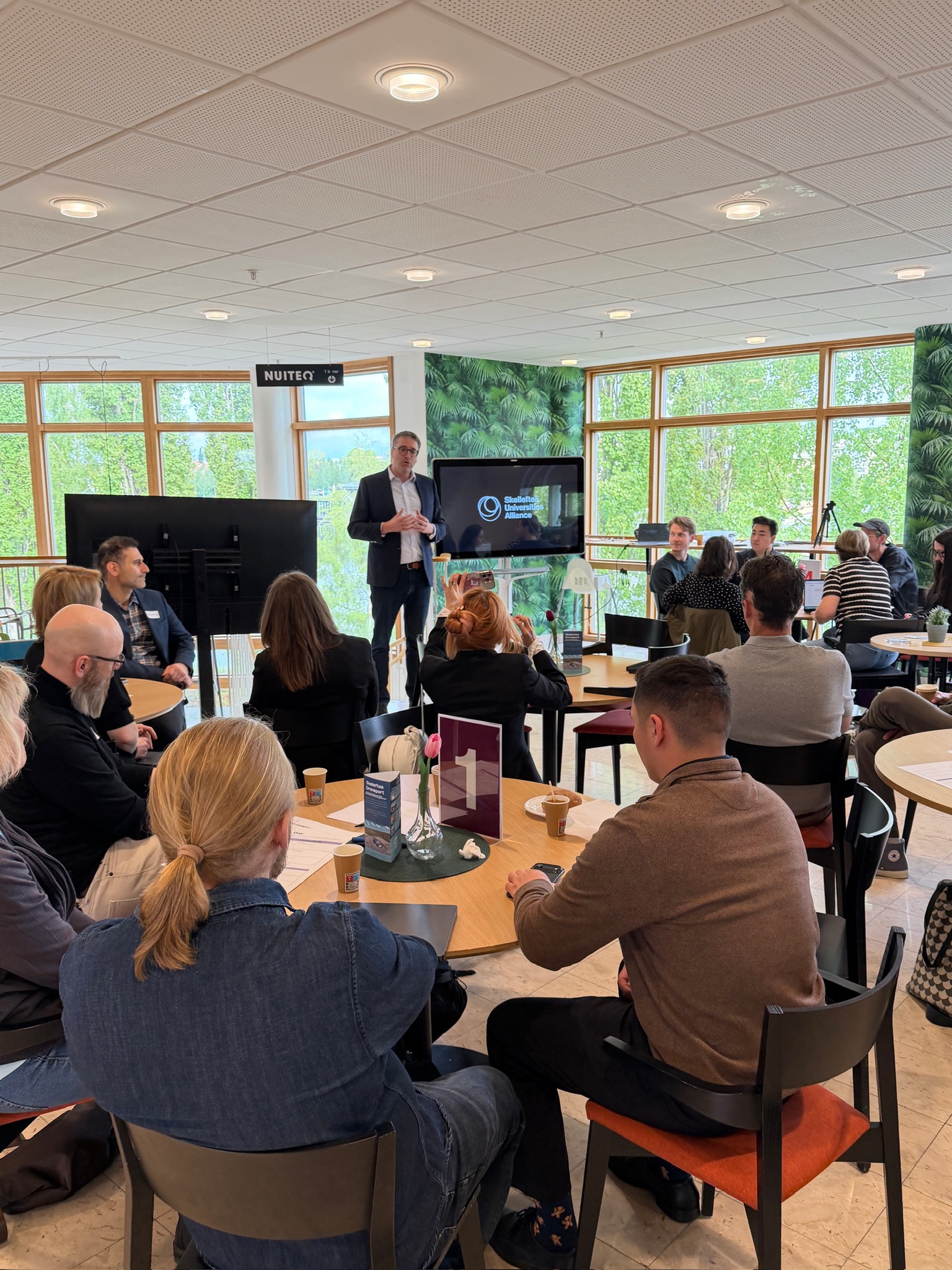
The workshop kicked off with a simple exercise: think back 50 years. It’s 1976. No internet. No smartphones. No Zoom lectures or LLMs. The tools were different, the norms were different, and the opportunities available to student looked almost nothing like today. It was great to get perspective from different types of people. If the world changed that completely in five decades, what does it even mean to plan for the next fifty years?
That tension ran through pretty much every conversation. If knowledge is available everywhere, why gather in person? If degrees stop meaning what they used to, what replaces them? If AI can teach and assess better than any professor, what’s the human’s role? Heavy questions, but good ones.
Then you flip it to 2076. Nobody in the room was pretending to have the answers. We collaborated and discussed the arising frictions and tensions a campus must address. Talking about challenges that come ahead, our groups developed a prototype that addresses the challenges we recognized.
Being in Sweden gave the conversation an interesting layer too. There’s a long-term thinking built into Scandinavian culture that shows up everywhere — education, sustainability, city planning. Institutions here tend to be built around people first, and it shows. It got me thinking about what other countries, including the US, could take from that approach, especially when building systems meant to actually last.
Walking around Skellefteå after, the city itself felt like a quiet answer to everything we’d just discussed. Small, thoughtful, built for the long haul. Maybe that’s the whole point — the campus of 2076 doesn’t need to be bigger or flashier. It just needs to think further ahead.