Stockholm was an absolutely incredible experience, but after four amazing days, I felt it was time to venture further. So, we hopped on a plane and flew an hour south to Copenhagen. As soon as we landed, it was apparent that Copenhagen was remarkably compact, even more so than any place we had visited in Sweden. Walking around the city immediately evoked memories of New York City, with its tightly knit buildings, slender walkways, bustling atmosphere, and crowds of people occupying every available space. The sense of familiarity was striking. However, upon arrival, I must admit that the cramped surroundings made me feel a bit claustrophobic. In response, I decided to delve into some research about Denmark, seeking to better understand its unique characteristics. It came to my attention that Denmark is, in fact, the most densely populated country in the Nordic Region (Nordic Co-Operation).
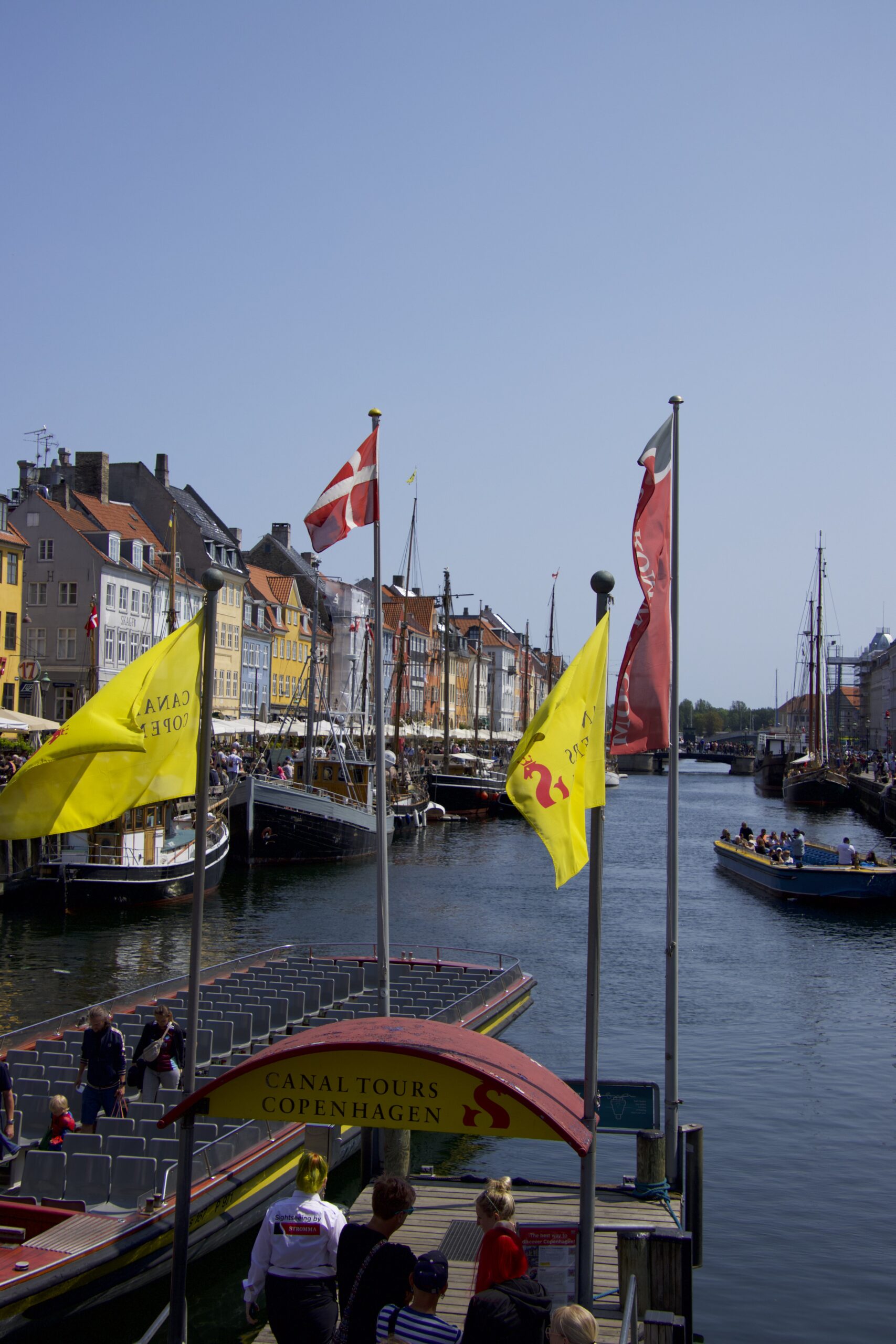
I couldn’t help but notice that much of the architecture in Denmark bears a resemblance to what we witnessed in Sweden. The buildings exhibit a minimalistic yet captivating aesthetic, eschewing the ornate designs often found in France. I have attached pictures of my time in Nyhavn, a stunning area adorned with vibrantly colored homes. In contrast to the United States, where brightly painted houses are a rarity, the sight of these uniquely hued residences has been a delightful experience.
Similar to Sweden, Denmark places a strong emphasis on sustainability. Upon landing at the airport, one cannot help but notice the wind turbines dotting the coast. Our hotels encourage the reuse of towels, and many establishments encourage visitors to refill water bottles rather than purchasing new plastic ones. And while discouraging plastic is one of their biggest campaigns, there is another aspect of Denmark that is probably more abundant.
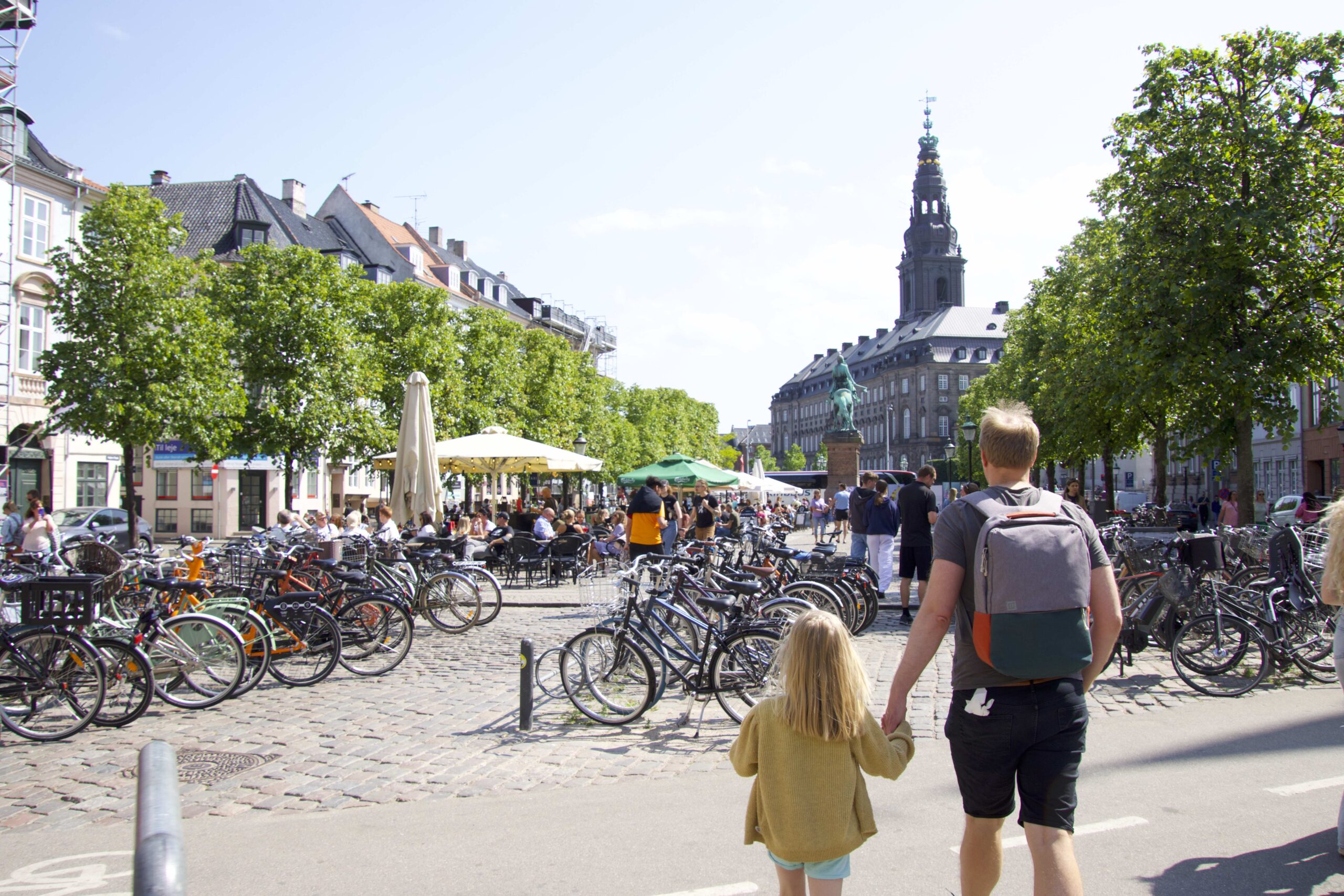
Denmark is perhaps best known for its biking culture. Unlike the United States, where biking is often seen as a niche activity, Denmark fully embraces cycling as a mainstream mode of transportation. This cultural acceptance of biking stems from a variety of factors, most notably the convenience and utility it offers over cars. Unlike in the US, where a car is a necessity for most daily activities, much of Denmark is highly walkable or bikeable. Bicycles not only provide convenience but also contribute to sustainability. In fact, the Danish government aims to develop an extensive network of bike roads in place of car-centric ones, with hopes of reducing carbon emissions (AutoVista24). This commitment to “green conversion of the roads” is truly commendable, making biking both enticing and safer, as cyclists do not impede pedestrians (AutoVista24).
During my explorations, I came across a fascinating fact about Bluetooth. Harald Bluetooth, a Danish king, successfully united the Danish tribes under one crown (King Harald Britannica). The creators of Bluetooth technology were so captivated by this story that they likened their invention to King Harald’s unification of the Danish people (PC World). They even incorporated the runes forming his initials into the Bluetooth symbol. The parallels drawn between the unification of devices and the unification of Denmark under King Harald are quite intriguing (PC World).
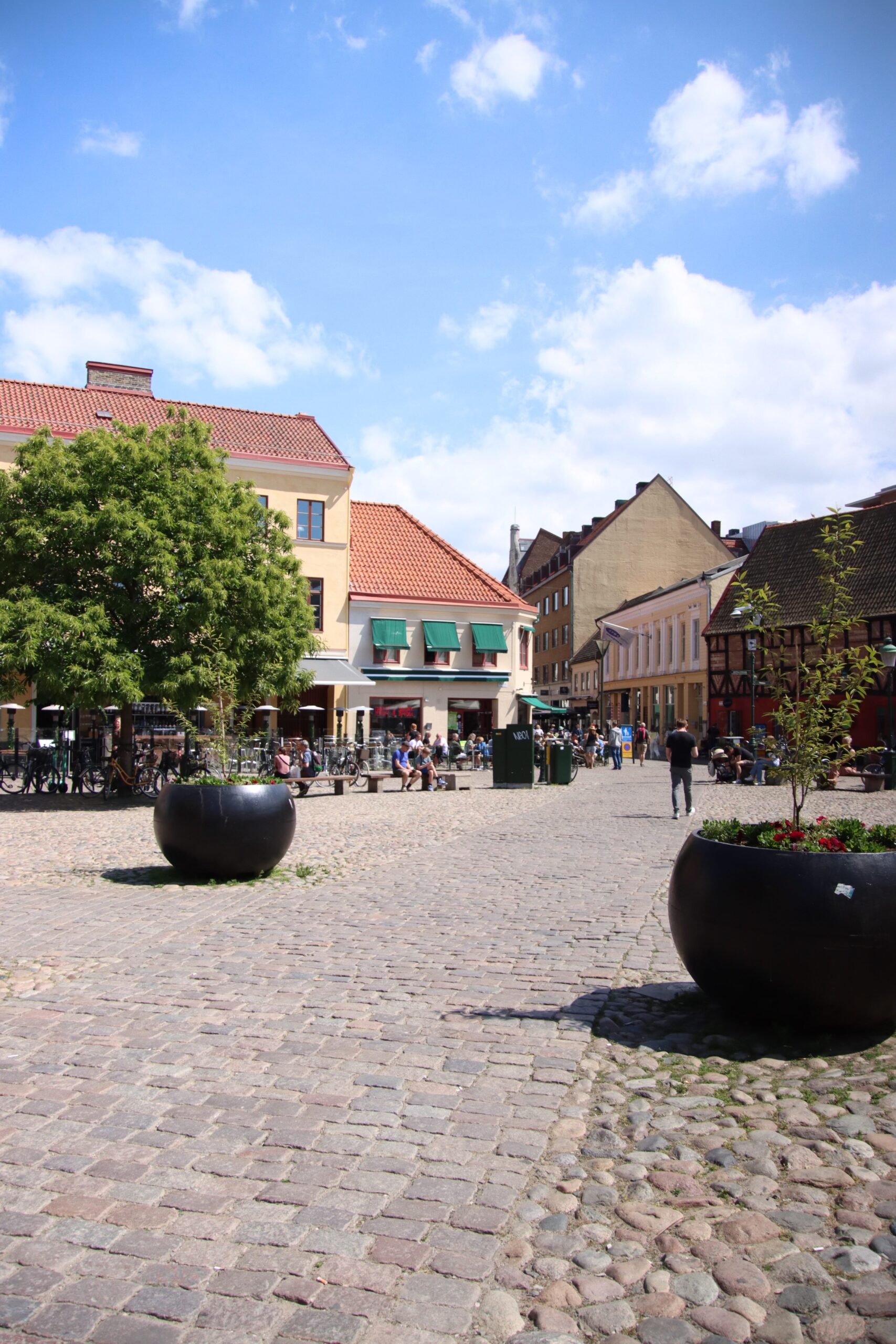
The next day we traveled to Lund and Malmo. We spoke to a company called Cognibotics. Their founder, Klas Nilsson, was amiable and spoke to us about his robotic products. Seeing how their work revolutionized part of the manufacturing lines was genuinely incredible. They are making production safer and more efficient. I think it’s fantastic to see how the inspiration for their work was originally automating processes, but then how safety became an important part of their work. It again shows how the Swedes are caring in everything they do.
All in all, it has been truly captivating to witness the similarities between Danish and Swedish cultures. The profound impact of their historical interdependence on their present-day identities is readily apparent.
Thanks,
Sam Hartman
Ethan P5:
Ok, so I know what I said last time about focusing on the business side for this one, but I’m pushing that to the next post since Sam has already written her part of it and spoke on the big Copenhagen one that I wanted to talk about. Whatever, let’s get into it.
As with most people I talked to, my first impression of Copenhagen was underwhelming. I had heard friends who had visited talk about their time there and say they had a blast. Thus, my expectations were high. I’m sure you can read in all the other blogs about the hotel situation, but in my opinion it wasn’t that bad. I’ve for sure stayed in worse and, once I figured out how to open the window to let cool air in, I was fine. Also, it had ping pong table tennis (excuse me Niklas) which I love. It’s at that table that I came to realize that Niklas is insane. It was a close game and then he started chanting every time he scored a point and it shook me to my core. Somehow I only lost by 3, but I’m not sure I’ve recovered even now.
Anyways, the main reason for my initial feelings was that the first place we went was incredibly touristy and I could not for the life of me understand why. It’s a few colorful buildings. What’s the big deal? Who knows, but for some reason it is and that meant it was very crowded and very hot and dirtier than the lovely Swedish streets we were used to. So, I had my reservations going into the next couple of days.
But it ended up being a really enjoyable time in the end. I had a friend from college who happened to be in town at the same time and I got to catch up with him over a drink for a bit. I found my way to the cleaner and less tourist filled parts of the city and had an incredible time with great people and cool architecture.
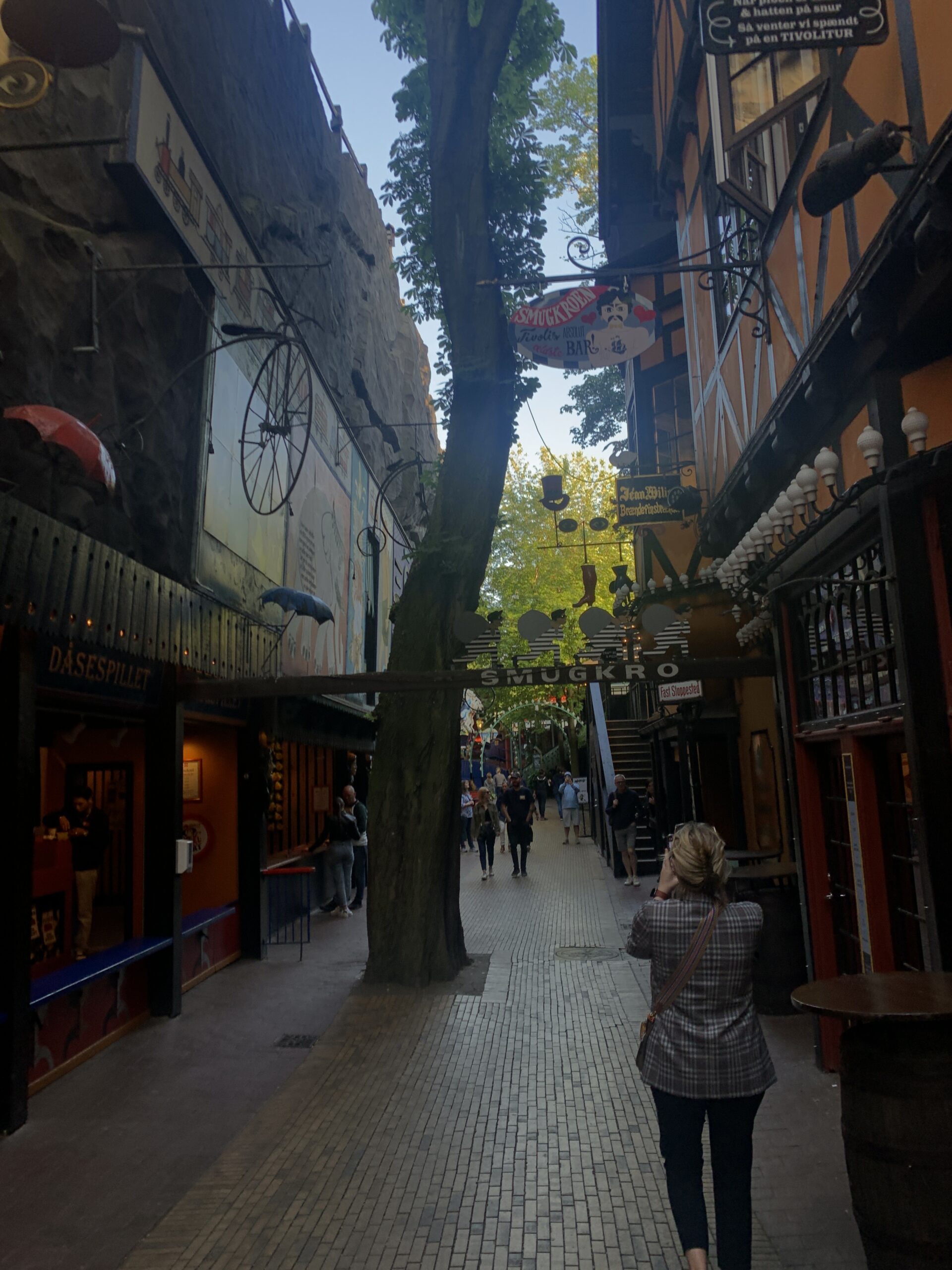
The first night, we went to Tivoli. We didn’t ride the rides this time, but played a couple of the games and walked around. It was a lot prettier from a design standpoint than its Swedish counterpart, but it’s hard to beat the views in Stockholm. I ended up winning the game with the horses racing towards the other wall, but all I got was a lousy mini deck of cards. It was fun hearing the person imitate horse racing commentators, especially when he did it in Danish. Swedish and Danish are fun languages, I’ve found in my time here. Niklas if you read this I’m sorry, but they sound made up. Like there’s no way you guys are actually saying things. Kidding of course, but they are really odd to the ear. I guess others could have the same perspective on English, but it’s rare to hear Nordic languages in America, so we aren’t as used to them as something like Spanish or even French.
The next day we went over to Lund and Malmö. Sam already touched on this, but I’ll try to expand a bit. I found the robotics company we visited to be really neat. The machines that were shown were impressive and learning the reasoning behind specific decisions and the practical applications of their use was pretty enlightening to me since I know next to nothing about the field. I thought that the carbon fiber design looked cool and was interested to learn that the slight disadvantage in precision compared to heavier machines isn’t as important as one may think. After that, we had a very short visit with a company working with probiotics. We toured the incubator where I believe they held an office space for a while and got to see certain other businesses at work through the windows. We saw a few of these on the trip and I think it’s a really great idea and I’m happy it’s so prevalent in Sweden.
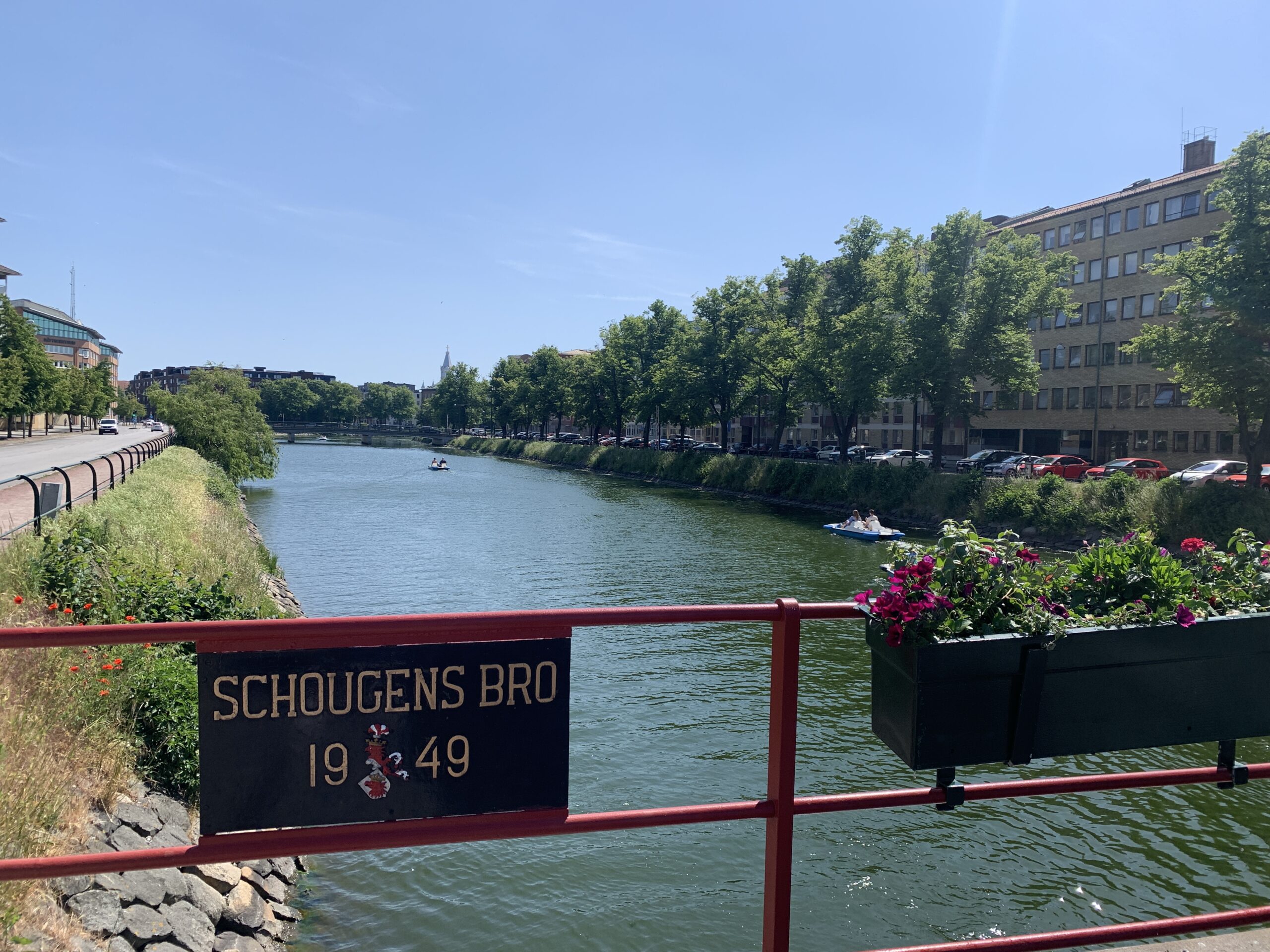
Post-Lund, we went to the really pretty little town that is Malmö. The water, the buildings, the parks. Each one added so much to the other. It was well kept and seemed pretty happening from what I could tell, but that may have been all the high school graduates driving around in sailor caps blasting music and air horns to celebrate. I got threes sweets at a local shop that I told myself I’d eat later and then proceeded to eat them all within the hour. I got to wander around solo for a bit, which I love, and stumbled upon a couple of small churches, while I also love. Also, we saw a pretty cool cathedral in Lund too. Once we left, we got to cross the bridge between Denmark and Sweden for the second time (beautiful views by the way) and Niklas told us a funny story about how the Danes were mad about the Swedes building a nuclear plant so close to their shores and so they fired back with a wind farm. Doesn’t seem like the punches were of equal strength there.
Our final day in Copenhagen saw us visiting the King’s Garden, eating great pizza at a place called Maupa and fresh strawberries at a farmer’s market called Torvehallerne, along with having a nice group dinner by those colorful buildings I loved so much. All in all, I enjoyed my time in Copenhagen. It’s a cool city and I would go back. Probably not for a while though.
I got one more of these coming up so be on the lookout.
Sincerely,
Bronze medalist in a ping pong tournament consisting of four people: Ethan