Understanding work-life balance in Scandinavia by learning about different holidays that Swedes celebrate throughout the year.
While we have not yet flown into Gothenburg, during our second class, we got a chance to be immersed into Swedish culture through Professor Myhr’s materials. Since our blog’s focus is on work-life balance, we thought it would be interesting to read up on Swedish holidays and learn about what Swedes do during their time off. According to the book “Traditions and Festivities: Celebrating the Swedish Way” by Po Tidholm and Agneta Lilja, some major holidays that Swedish people celebrate are the following: New Year’s Eve, Valentine’s Day, Easter, Walpurgis Eve and 1 May, National Day, Midsummer, “The crayfish party” during fishing season, the Surstromming premiere, Halloween, All Saints’ Day, St. Martin’s Day, Advent, Lucia, and Christmas.
One holiday we found interesting was Walpurgis Eve. During the Middle Ages in Sweden, the administrative year ended on the 30th of April. During this time, merchants and craftsmen hosted festivities such as trick-or-treating, dancing, and singing in preparation for the upcoming spring season (Tidholm, et al). Among farmers and peasants, it was an important day as the annual village meeting was held where the new alderman (head council) was chosen. At Walpurgis (now called Valborg), farm animals were let out to graze, bonfires were lit to scare away predators, guns and loud noises were fired to scare away predators, and young people sang songs for festivities. Today, it is celebrated as the beginning of the summer season; bonfires are lit at dusk in every neighborhood, nettle soup is made, group festivities are hosted in various cities, and adults may choose to go to restaurants, bars, or night parties to celebrate the beginning of summer. The next day is May Day (May 1st), where parades are hosted, so some people choose to party into the morning. While some customs and traditions are constantly changing, several Swedish traditions are rooted from pagan Sweden and from other countries like Germany. Swedish customs are, “closely associated with the changing seasons” (Tidholm, et al).
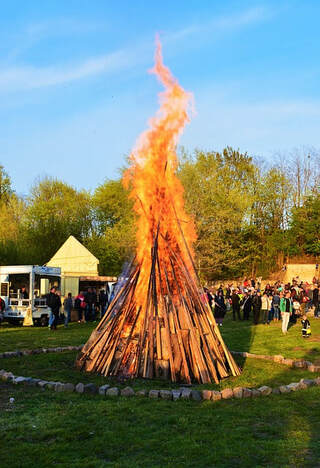
According to Public Holidays Global, labor laws regulating employment, salaries, vacation, and paid holidays are regulated by Acts of Parliament; these are known as “de facto” holidays. It is, “common practice for businesses in Sweden to close at noon the day before a public holiday. If a holiday falls on a Tuesday or Thursday, most employees are permitted time off for what is termed a ‘squeeze day.’ This allows employees to take the extra day that falls between the holiday and a weekend” (PHG). De facto days, “include Twelfth Night, Holy Saturday, Walpurgis Night, Pentecost Eve and All Saints Eve. De facto holidays which are typically paid include Mother’s Day, Father’s Day, Christmas Eve and New Year’s Eve. Although seasonal holidays are observed in Sweden, paid time off is discretionary. These celebrations include March Equinox, June Solstice, September Equinox and December Solstice. All holidays and annual vacations are regulated by Sweden’s Annual Leave Act, which pertains to all employees” (PHG). Sweden appears to provide employees with plenty of time off and encourages an environment that advocates for work-life balance.
This was an interesting part of Swedish culture that we enjoyed learning about and cannot wait to see it in action. We look forward to learning more about how people in Scandinavia spend time outside of work, once reaching our destination. See you soon, Scandinavia!