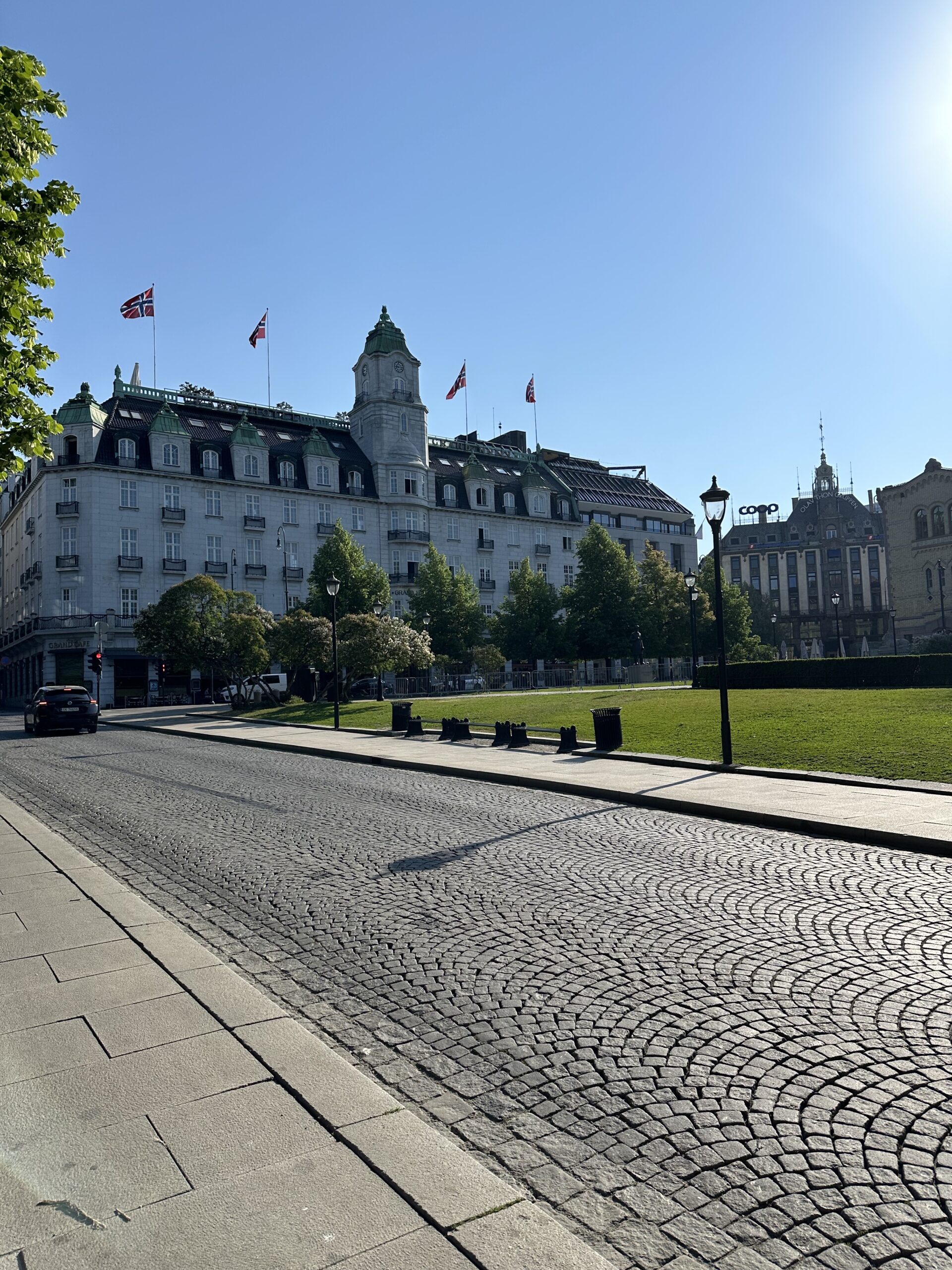
Like many other European cities, Oslo emphasizes accessibility through its public transportation systems. This makes travel through the city and its surrounding suburbs easier than in many cities in the United States. Using the train system in Oslo, we navigated our way to the city center where we found our hotel. The Thon Cecil is part of the larger Scandinavian hotel train, Thon. Like other similar hotels, they provide comfortable accommodations for those on a budget. As Norway’s largest city, Oslo has options ranging from hostels to 5-star resorts. Our Thon hotel featured knowledgeable receptionists who all spoke amazing English, lounges on every floor, and included breakfast. Unlike other hotels in Europe, Thon caters most of its services to tourists, so the breakfast consisted of local breakfast favorites as well as American foods. From brunost and fish oil to eggs and bacon, there was something for everyone. Being as centrally located as our hotel was, we were able to visit various destinations including Vigeland, the palace, city hall, the national theatre and the waterfront.
Oslo has an international airpot with easy access to public transportation both into the city and around Norway. We took the train into the city, stopping at the main station in downtown, Oslo Central. This station had many local stores, restaurants, and plant shops! Oslo Central is also connected to public transportation within the city. There is the subway and bus systems that allow for easy movement around Oslo, even with luggage! When exploring the city, we used the subway to travel to main tourist spots. The subway is combined underground and overground trains running in parallel directions. Buses and cars drive right alongside the trains! Stations are conveniently located around the city with convenience stores and bakeries located around each station. We were shocked to see how clean each station was, with minimal graffiti and next to no trash. We figured out the system using Apple or Google Maps as well as the designated app Ruters, that allowed us to purchase tickets. Interestingly, Oslo relies mostly on trust when it comes to tickets on the subways as there are not turnstiles. Additionally, we noticed young children riding public transport by themselves. Overall, we were very impressed with Oslo’s public transport and believe America could take some pointers!
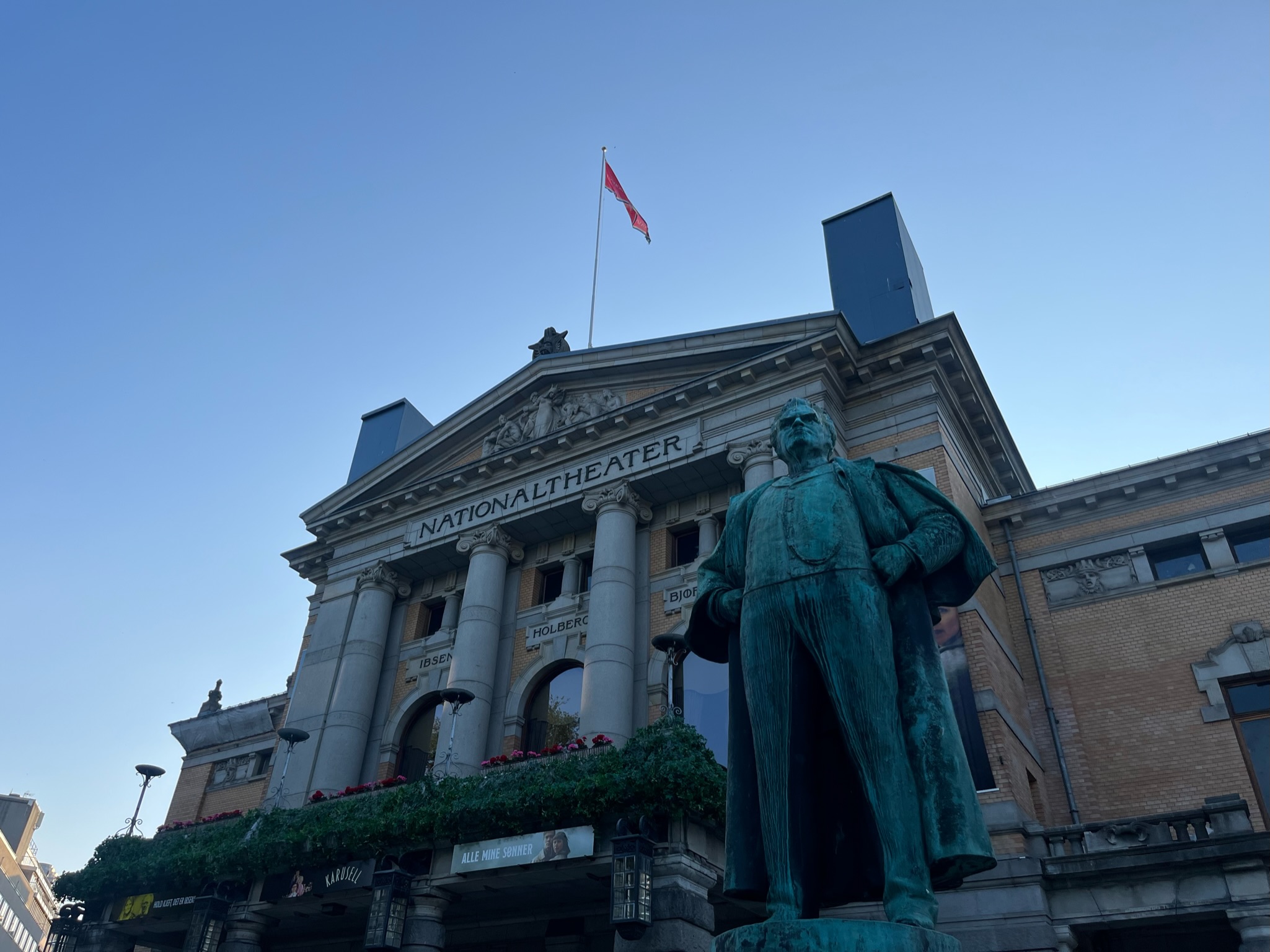
While deciding where to visit in our limited time, we consulted local experts! Luckily, our fellow Norwegian was able to give some insight into which tourist attractions were nearby and appealed to our interests! Like in England, it’s tradition for the national flag to fly above the palace when the royal family is in residence. We were unsure if this custom is still practiced, but when we passed by in the morning, the flag was flying, and later on in the evening, it was gone. Further down the road stood both the city hall and national theatre. Like many other parts of the city, both buildings were surrounded by statues of the important men and women associated with the place. The national theatre was all the more impressive for still actively hosting events even though it was opened in 1899.
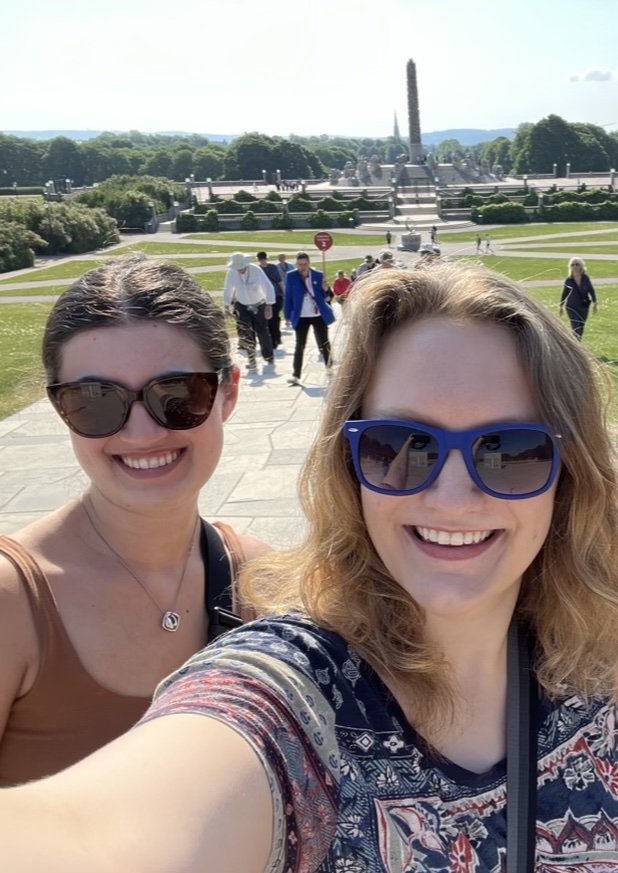
We especially wanted to see The Vigeland Park which opened in 1907 and contained the life’s work of Gustav Vigeland who created over 200 sculptures for the park. Among the statues, one stands out as a toddler boy appearing to throw a tantrum. It is rumored to be good luck to touch his left hand, as witnessed by its shiny surface, which we of course did. The park also had a public pool equipped with a mega water slide as well as tennis courts, play structures, and a dog park. The park was very tranquil and we experienced a sense of peace wandering around the gardens. We definitely recommend this spot for all who visit Oslo!