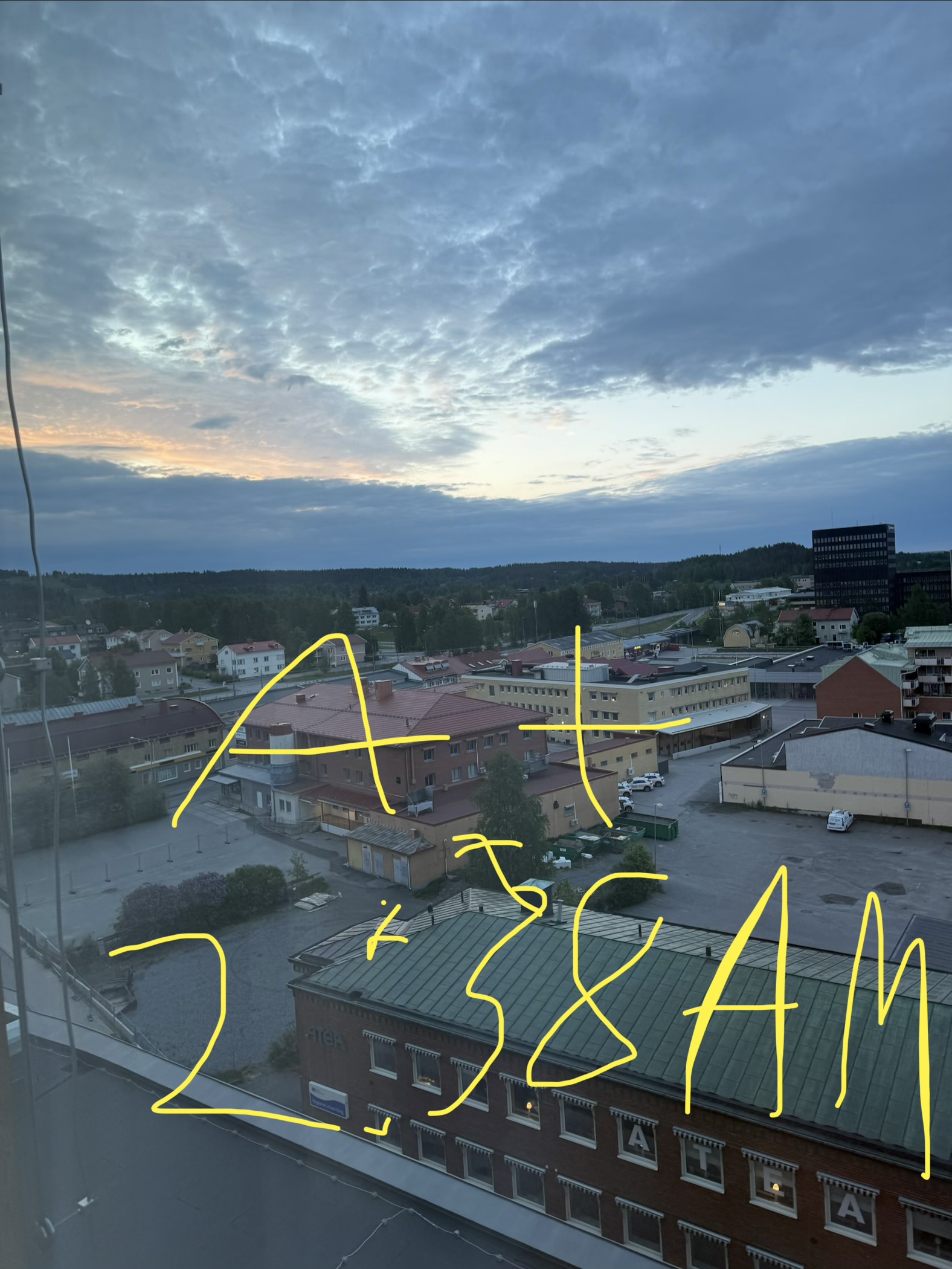
We had just spent a couple days in Northern Sweden, particularly the small town of Skelleftea, and this may have been the closest me and Henry have experienced being nearest to the Arctic Circle since I don’t remember my Cruise to Alaska at less than 1 year old.
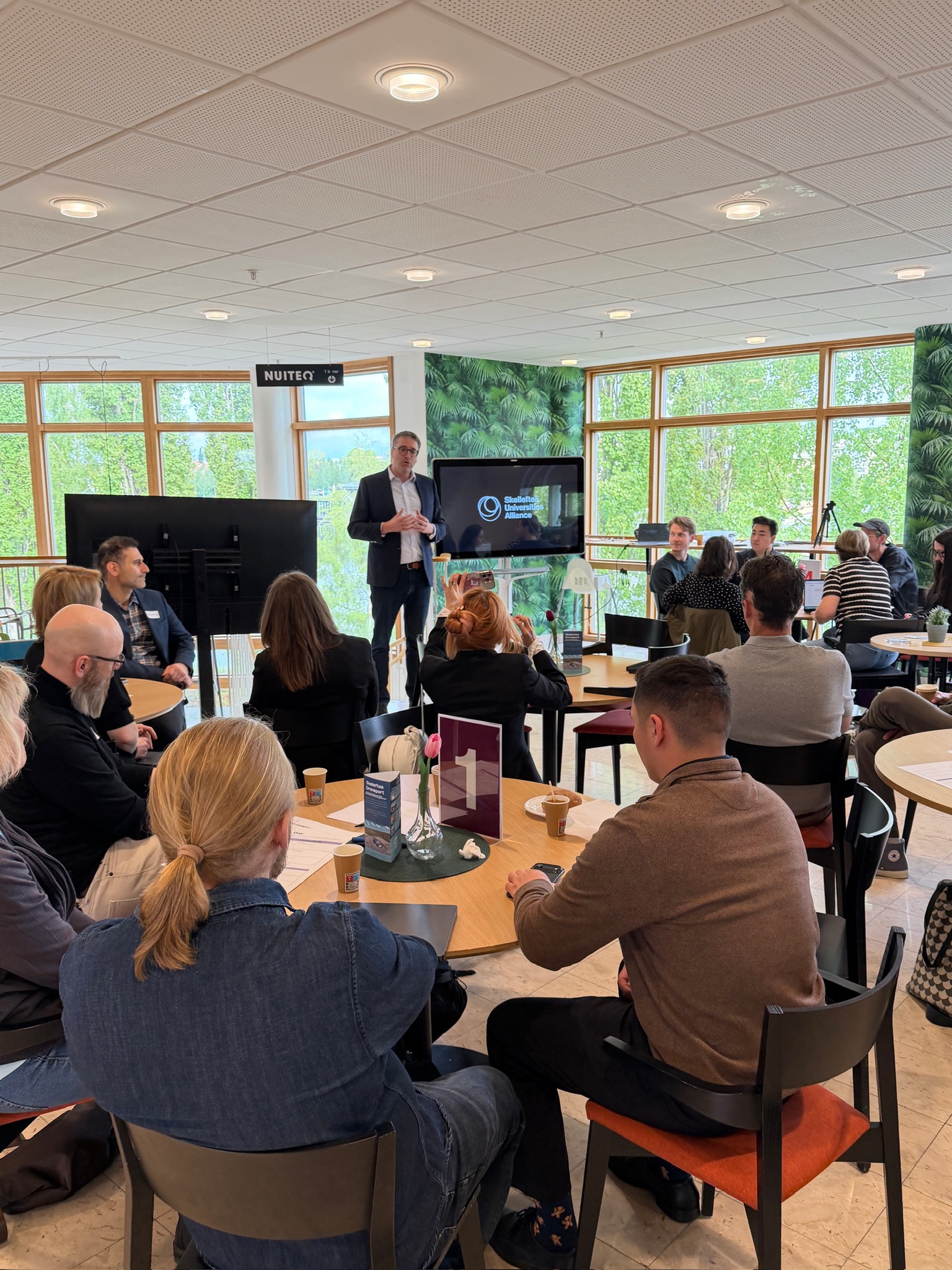
Anyways, when riding over to the Wood Hotel, I noticed that Skellefteå was a small region that was not just a small town, but a hub of many brilliant minds to come together, whether from Sweden or elsewhere from around the world, to brainstorm ways to save energy while putting their ideas into practice. Our first official day started with a visit to Skellefteå Campus where my cohort and I spent time in workshops and learning more about the campus.
During the workshops, we spent time analyzing the future of education and how the role of the teacher evolves or devolves decades from now. We made the conclusion that the role of a professor is becoming less of an absolute answer to everything and more of a firsthand exposure to different university topics. The role of general information being more accessible as well as more exposure to different perspectives through the internet.
We also had the time to learn more about what Skellefteå Campus was: a unification of many institutions and individuals who collab together to prepare for the future. After the info session, we went to visit our next stop.
Our second spot was the Skellefteå Droneport, where we all had the chance to learn more about how drone development has evolved over the years and the new innovative ideas they had in store for NATO.
Reflecting on our time in Skellefteå, I realized that our experiences highlight several powerful macroeconomic forces at work, most notably regional economic transformation, human capital development, and structural shifts in government expenditure. Seeing Skellefteå’s evolution into a global hub for energy innovation gave me a firsthand look at how targeted foreign and domestic investment (particularly related to the green energy transition) can drive regional GDP growth, create jobs, and stimulate international labor mobility by drawing top global talent to Northern Sweden.

Furthermore, during our workshops at the Skellefteå Campus regarding the evolving role of educators, I was struck by the macroeconomic concept of human capital development; as technological advancements democratize general information, education systems must structurally adapt to maintain labor productivity and prepare the workforce for a changing global economy. Finally, learning about the drone development initiatives for NATO at the Skellefteå Droneport showed me the real-world impact of defense spending and international trade alliances. It perfectly illustrated how government fiscal policy and security investments can act as an economic multiplier to spur technological innovation and local industrial expansion.