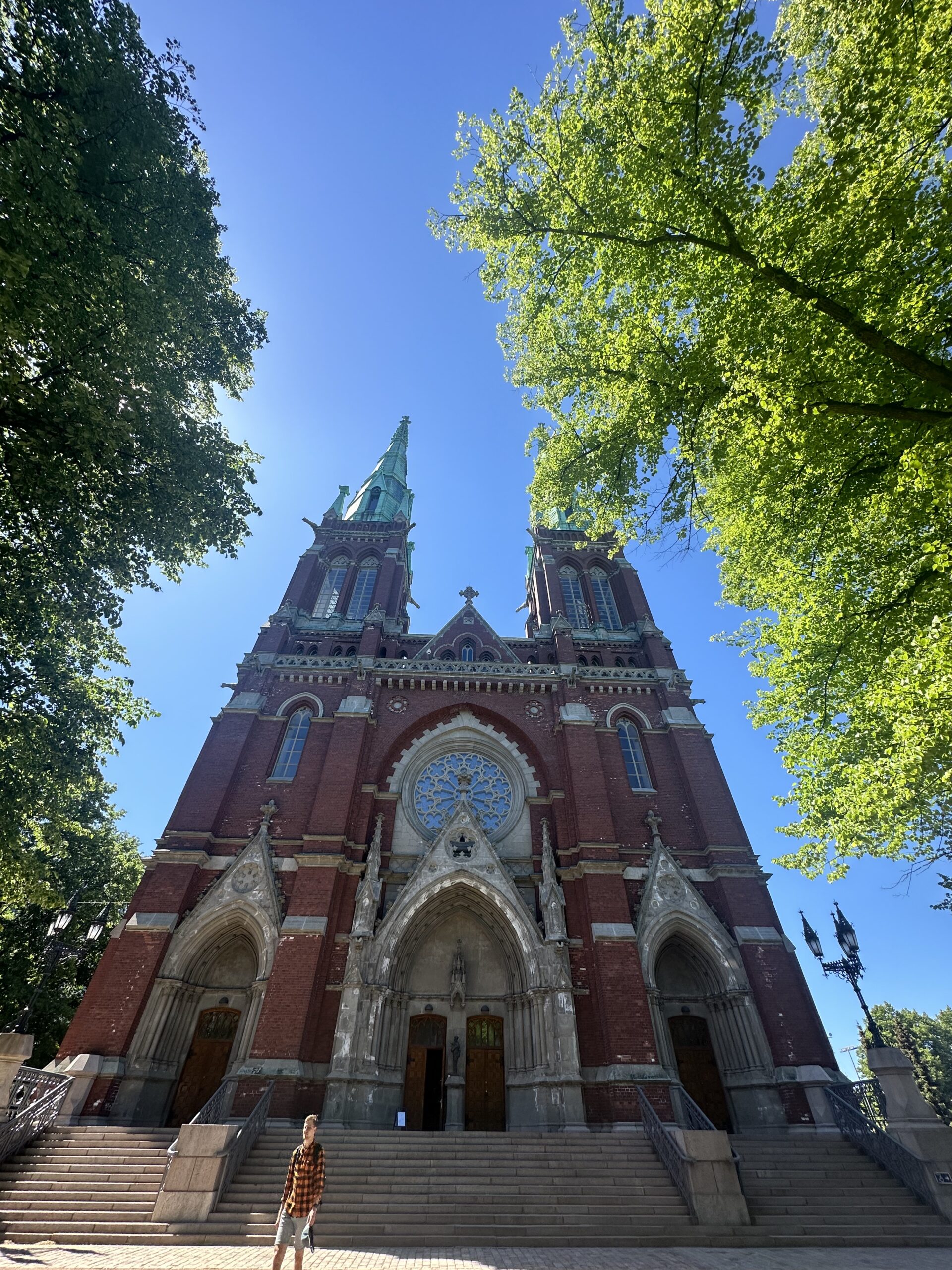
We’re writing our final blog post while waiting to leave Helsinki airport! What an adventure Helsinki was. After landing in Helsinki, we explored the popular downtown area and got pizza together with a large group. We were surprised to learn that there was a less distinct downtown area like we had seen in areas of Stockholm.
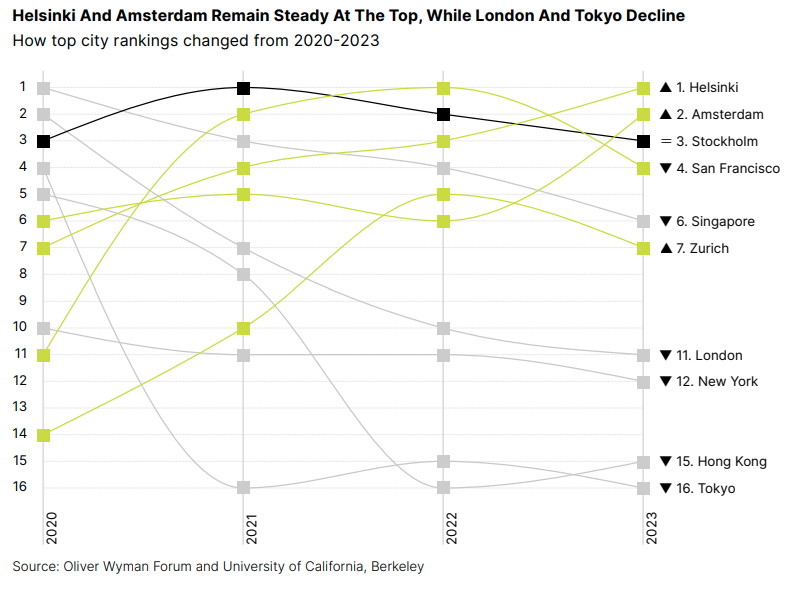
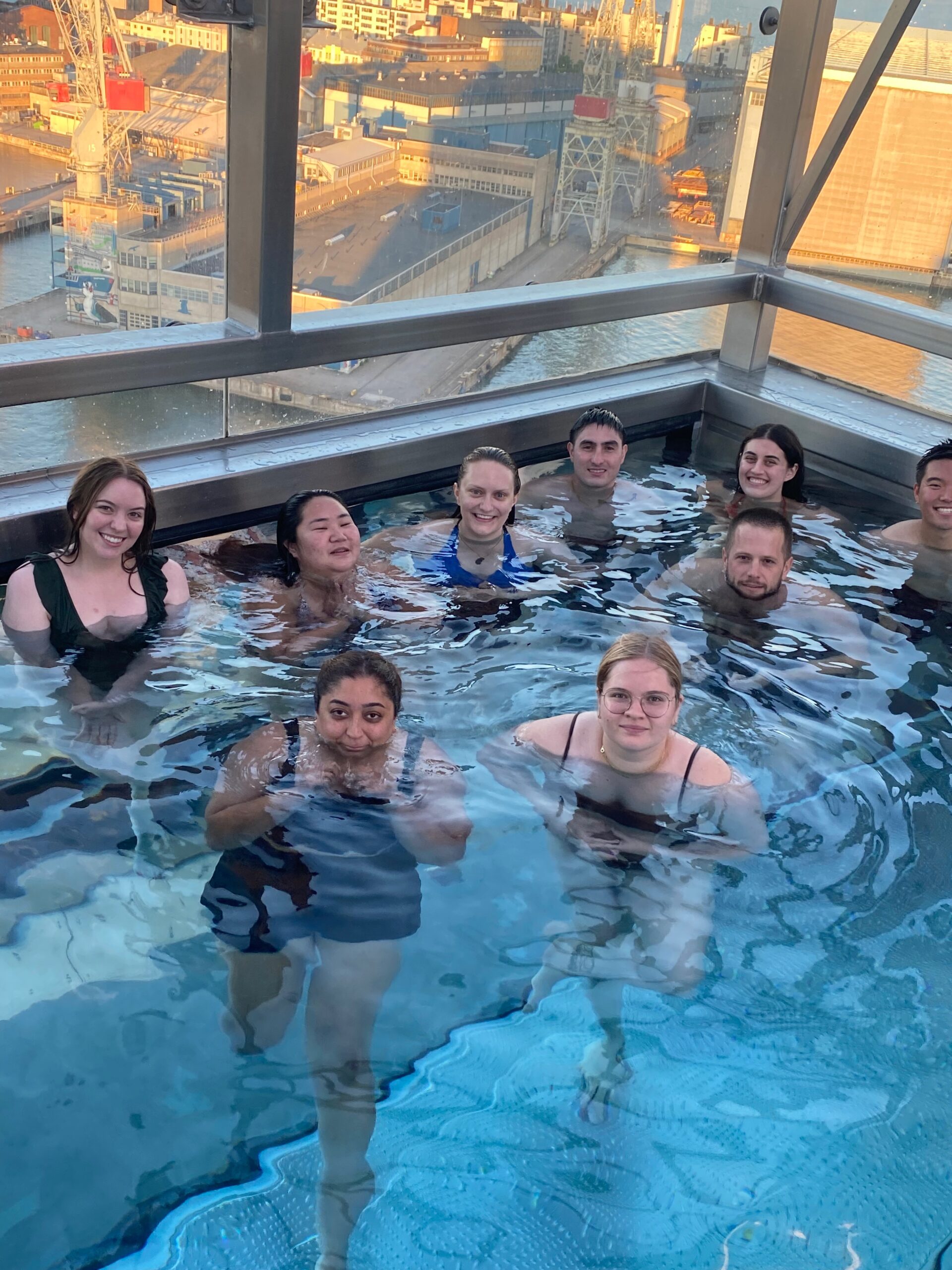
After relaxing in the hotel, we decided to explore the sauna and pool at the hotel! We had a great time with both friends and hotel guests, and we learned some great tourist sites to visit. While in the sauna, we conversed about some of the differences between the US and Finland. We settled on the topic of transportation, and how their public transportation is largely funded by their taxation system, making it easily acceesible, well maintained, and relatively cheap to use. By comparison, the public transportation system in the US, no matter the area, is underfunded and poorly maintained, often becoming a hotspot for crime and mismanagement. While this is not a typical work benefit, this is a benefit that their government structure provides them, and it is a very popular way for Scandinavians to commute to work. In fact, Helsinki was ranked as the number one in the Urban Mobility Readiness Index, due to their recent infrastructure overhaul. Stockholm is also well known for their mobility. In the US, cars are the king of transportation, with 73% using them daily, and only 11% daily using public transport to get to work.
It was interesting to compare Helsinki to Stockholm, the capital cities of Finland and Sweden. While there are similarities between the two cities, there are also major differences. One immediate difference I noticed was that in Helsinki, the influence of Russian culture was much more prevalent. Of course, given the history of the country it makes sense, but I noticed the Russian influence in the food, language, and other aspects of the culture. Helsinki also seemed to be much more spread out than Stockholm was. Stockholm is a much larger city in land and population, but in Helsinki things seemed to be farther spread apart than Stockholm, thus why public transportation is so vital. Stockholm also had a greater mix of architecture in the city. Stockholm seemed to have architecture that was both older and more extravagant and more modern than Helsinki had. However, Helsinki also seemed to have more nature in the city than Stockholm. It seemed to be that Sweden was a slightly more developed country than Finland was, which based off the GDP is true. Sweden has a GDP of $591.2 billion while Finland has a GDP of $282.9 billion.
Reflecting back on the trip now, we are extremely grateful that we got to experience Finland in addition to Sweden. Both are remarkable countries with unique offerings. If we had more time on the trip, we would have also loved to have taken the ferry to Talin, Estonia for the day. Estonia seems to be an interesting country with lots of nature and deep history. We were told that Finnish locals often take the ferry to Talin as they like to relax their and take advantage of the cheaper taxes and prices their.
As we conclude our final blog post, we would like to thank Professor Myhr and Professor Turk for an unforgettable, once-in-a-lifetime trip. Your guidance throughout the trip made the trip incredible. We enjoyed getting to know both of you more throughout the trip, and hope to stay in contact after the trip!
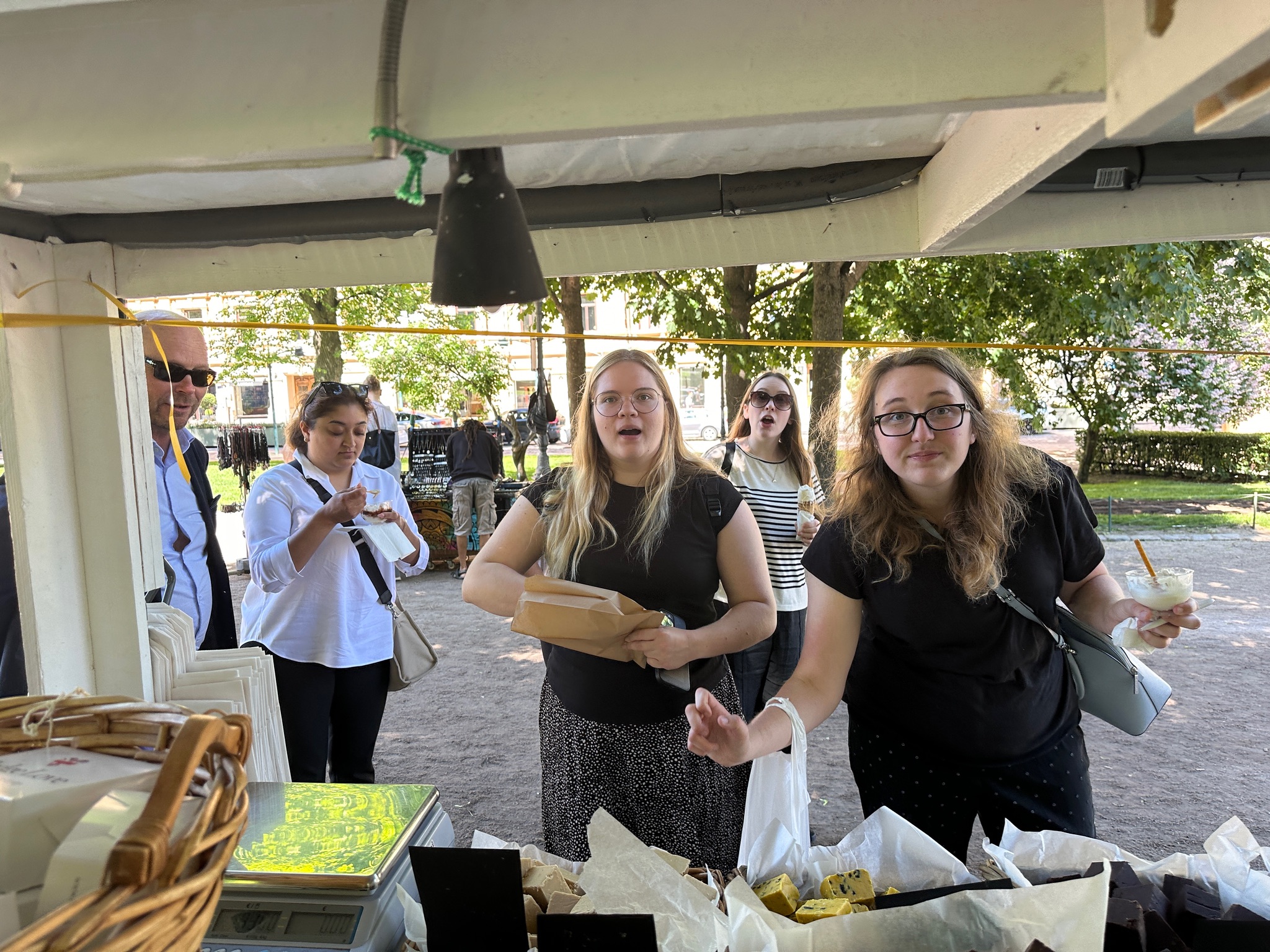
Fun fact: This picture was taken by Professor Myhr while we were getting fudge during our exploration time; we had no idea he was there, as you can see