The EU, while not necessarily being the home base of innovations found in Silicon Valley, still has a significant impact on the direction of developing technologies. Most recently, the EU has served as the last bastion for consumer rights and privacy by mandating USB-C ports in phones and by introducing the GDPR Act.
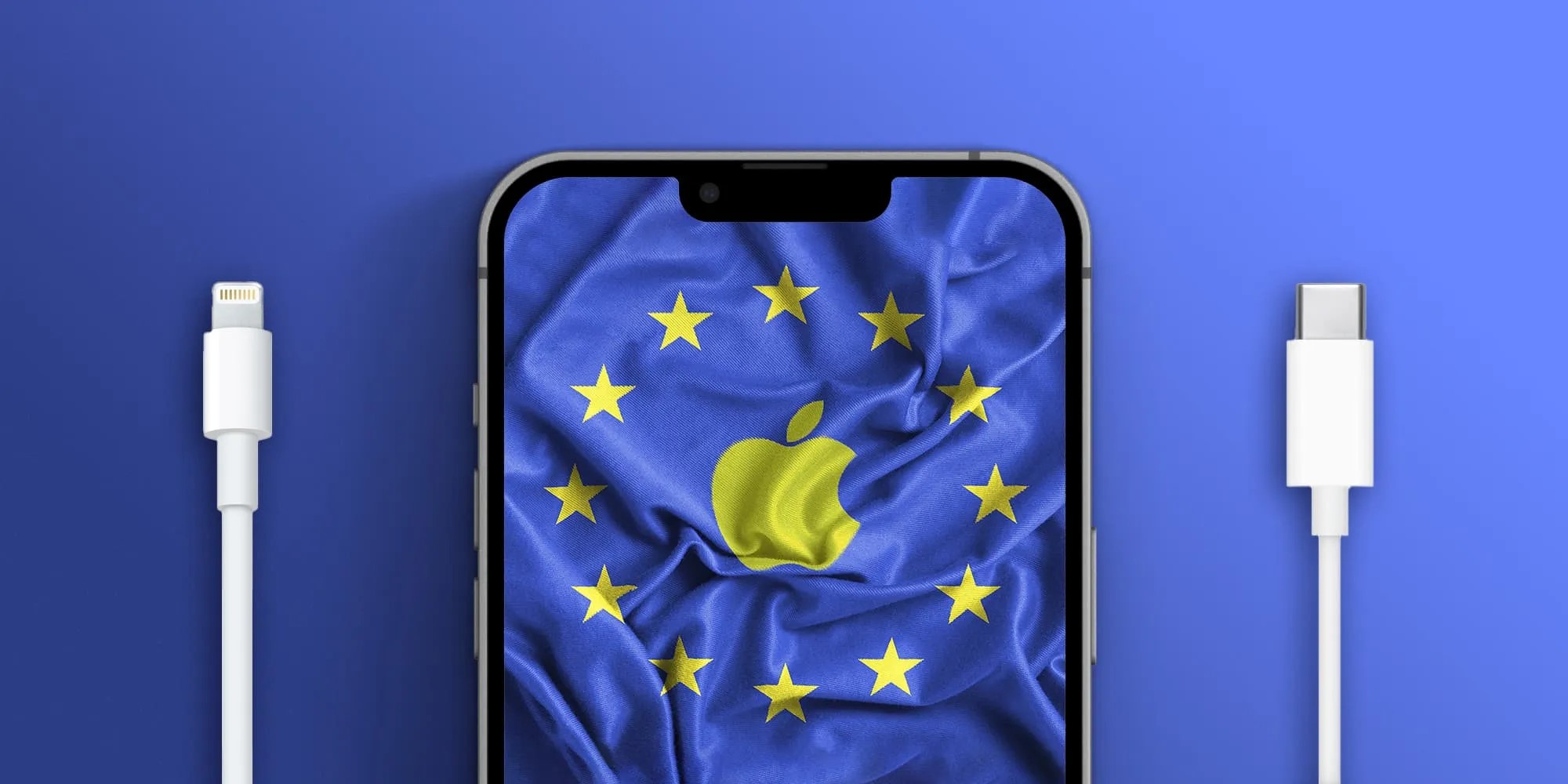
In May of 2022, EU’s parliament passed the universal charging act, mandating that “by the end of 2024, all mobile phones, tablets and cameras sold in the EU will have to be equipped with a USB Type-C charging port. From spring 2026, the obligation will extend to laptops”(European Data Protection Supervisor). The act was created to reduce E-waste and allow consumers to reuse chargers. The new regulations’ impact was seen immediately when Apple announced the iPhone 15–using a USB-C port instead of their proprietary lightning connector. While Europe is not Apple’s largest market, it is still important enough for Apple to make critical changes to their hardware and entire product line.
Additionally, the entire internet was changed by EU regulation in 2016 by the General Data Protection Regulation (GDPR) (European Parliament). The GDPR requires any profiting website to get permission from users to gather their data and must transparently inform users how their data will be processed. Often times, this is seen in websites as accepting cookies. Nearly every website today, regardless of whether a user is in the EU or not, asks users for permission in order to cooperate with the EU and not incur fines for defying the GDPR. Once again, the EU’s regulations have changed technology forever.
LINKÖPING UNIVERSITY

Shortly after our visits with VOLVO and SAAB, the Valhalla Visionaries adventured to Linkoping to gain insight on its university and how it develops visionary thinkers and engineers that feed into and support these prestigious companies.
STUDENT RIGHTS
During our presentation, we met many esteemed individuals that represented various sectors of Linkoping University. One sentiment was made abundantly clear: Students have full intellectual rights to their work. This particularly diverges from how American Universities own portions of their researcher’s work. This particular Scandinavian ideology completely flips the motivation of research on its head. Instead of being forced to work for the university, PhDs at Linkoping were supported in exploring their passions and generating knowledge. Personally, we believe that this process leads to more rich research and interesting findings. While not all hypotheses will be proven true or may not lead to profit, generating knowledge only makes the world a better place and creates a brighter future for all.
AI REGULATION

At Linkoping University, we met Frederik Heintz, the head of the division of Artificial Intelligence and Integrated Systems. While he gave an oversight of how Linkoping is modernizing their education for a future filled with AI, we found his participation in creating the world’s first legally enforced AI regulation system particularly interesting. Heintz research focused on creating strict requirements on measuring the trustworthiness of AI systems. He created several distinct trust levels including Unacceptable Risk, High Risk, Limited Risk, and Minimal Risk. AI models considered having Unacceptable Risk include activities like social scoring, facial recognition, biometrics, and manipulation. On the other hand, Limited Risk contexts include video games and spam filters. Software classified under any of these filters will receive associated consequences or may be banned outright in the EU (Artificial Intelligence Act). Because the EU makes up so much of the global market, Silicon Valley and other members of Big Tech will be forced to comply and develop their AI products around these regulations. Personally, we feel like this may slow innovation and progress, but is a necessary compromise to ensure safety and privacy of the public. Much like how the EU was integral in protecting hardware and privacy rights of consumers in the past, the EU continues to trailblaze protecting consumers from AI technologies. Silicon Valley can create the next generation of technology, but the EU’s dedication to people will always be needed to reign in the unhinged nature of Big Tech.
All this is to say is that European regulations heavily influence the world’s biggest markets even when they are not the largest revenue stream or market share audience. The EU’s more consumer focused culture will serve as the key balancing factor that protects people against overarching US Tech monopolies.
RESOURCES
Artificial Intelligence Act: Meps adopt landmark law: News: European parliament. Artificial Intelligence Act: MEPs adopt landmark law | News | European Parliament. (n.d.-b).
Long-awaited common charger for mobile devices will be a reality in 2024: News: European parliament.
The history of the General Data Protection Regulation. European Data Protection Supervisor (n.d.)
Wahrby, E. (n.d.). Fredrik Heintz – member of the Government’s new AI Commission. Linköping University.