Hi! Carrie here, ready to recap our first couple of days in Stockholm, which was packed with a lot of really interesting visits to companies of all sizes.
Sticking with the theme of comparing and contrasting Swedish and American businesses, I noticed that Stockholm-based businesses do a better job of emulating the qualities they admire about American companies than the ones we learned about in Skelleftea, which is really just starting its journey to becoming more business savvy as a society. As we learned at Spotify, sometimes being agile and making quick decisions is preferable to achieving consensus, and failure is not always a bad thing. Robel Efrem, CEO of Challengermode said it best: “Swedish people make great team players; Americans make great leaders.”
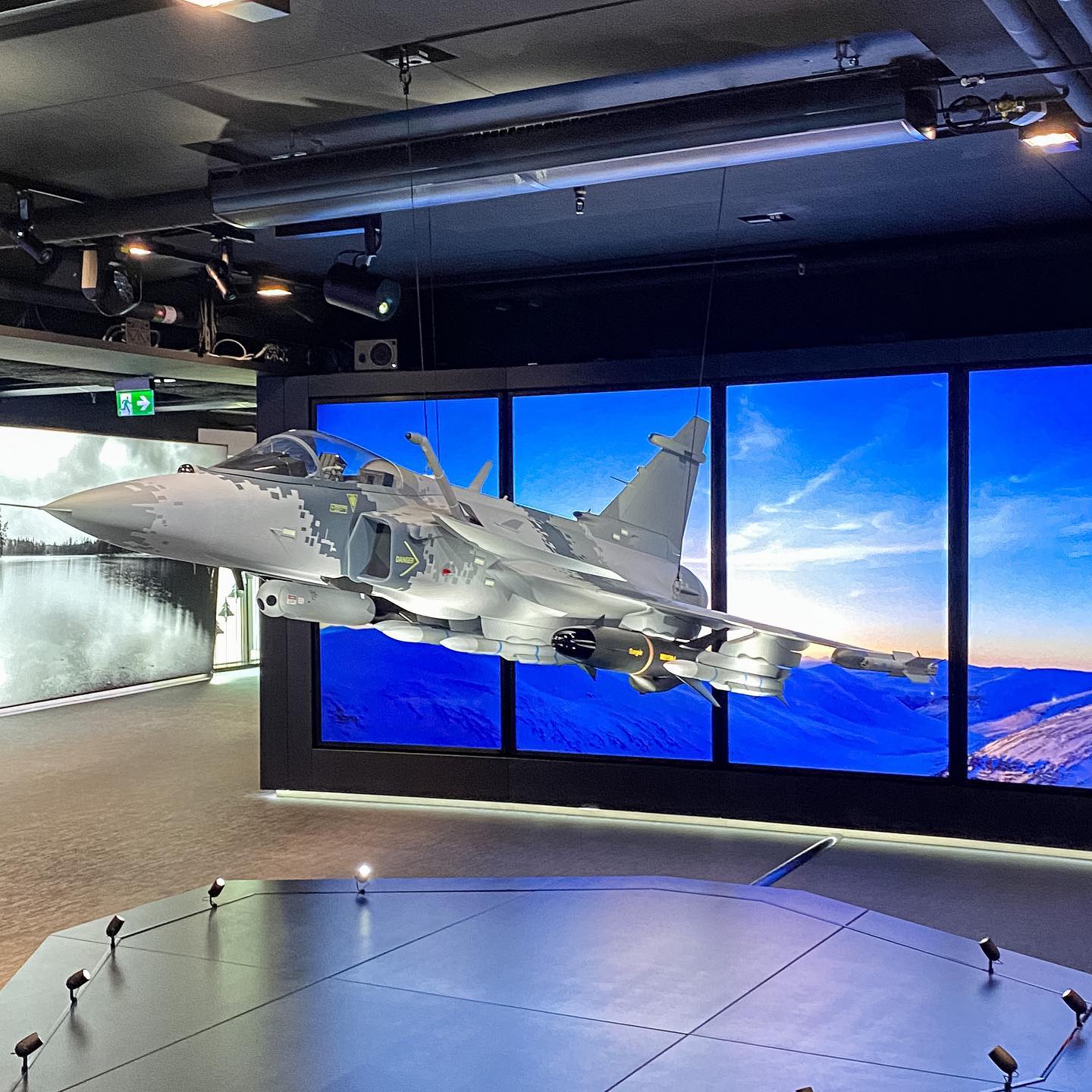
First we visited Saab, where we learned about the geopolitical climate of Sweden and how that plays into the global weapons and defense trade, a super relevant topic of today given the US’s and Sweden’s involvement in the Russia-Ukraine war. As an American, I most associate Saab with the unsuccessful car brand of the late 20th century. However, Saab is best known internationally as a maker of advanced weapons systems, underwater systems, command and control systems, aeronautics, and other tools utilized by militaries around the world. If comparing them to an American company, they might compete most directly with Boeing, Northrup Grumman, Lockheed Martin, or Raytheon. However, when Lars Tossman, Head of Aeronautics, was asked how they compete with US-based companies, his response was that they don’t. To attempt to compete with a country of America’s size and influence would mean wasted resources for Saab, which Tossman admits will “never be a tier one company in the US.” While they may benefit from owning subsidiaries or partnering with companies on US soil, Saab’s effort is better spent bidding on projects not desirable to US defense companies.

The next day, we visited Spotify, a Swedish company that is a household name to most US consumers. Anna Lundstrom, Vice President of Human Resources, explained how Spotify does its best to emulate the best qualities of both Swedish and US business practices. For example, Spotify provides its employees with benefits typical of traditional Swedish businesses like six months of paid maternity leave and home/office flexibility. Sweden is also known for taking a neutral stance on big issues, which Spotify is as well, although they may work behind the scenes to benefit causes that are central to their mission. However, Spotify recognizes the need to gather consent rather than consensus when making decisions, as they need to be agile and solve problems quickly to meet their aggressive growth goals. Furthermore, Spotify recognizes that there is no innovation without failure. Spotify is not afraid of change and seeking new verticals to break into. Therefore blending American business practices with Swedish values to create a “nice,” collaborative, and playful culture.
Can’t wait to see where our tour of Stockolm takes us next! See you there!
Carrie