During the initial two days of our travel course, we had the privilege of immersing ourselves in the region of Skellefteå, which stands out for its profound emphasis on sustainability as a foundational element of both its community and business ventures. In Scandinavia, the commitment to exclusively utilizing renewable energy sources is not merely a marketing strategy; it is a deeply ingrained belief in forging a more sustainable future that is evident to other nations.
A significant aspect of this sustainability focus in Skellefteå is the predominant use of wood in construction practices, which aligns with their broader sustainability goals. By embracing wooden structures, they address various dimensions of sustainability, even going so far as to plant two trees for every one that is felled for construction, thereby safeguarding against deforestation and preserving wildlife habitats. This realization was particularly impactful, as we came to understand that these practices were driven by a genuine commitment within their communities, extending far beyond profit-oriented motivations.
During our stay at The Wood Hotel in Skellefteå, Sweden, we had the opportunity to witness firsthand the manifestation of these sustainability principles. The hotel was constructed primarily using wood, exemplifying how sustainability was not viewed as a hindrance, but rather as an opportunity for innovation and improvement; the usage of wood goes as far to include the walls, room keycards, and even toothbrushes. This perspective was further reinforced when we visited Lundqvist Trävaru, a company specializing in automated construction of wooden houses and cottages. We were astonished to learn that they effectively eliminated waste and leftovers by meticulously planning their orders and manufacturing processes. Through precise measurement and strategic block placement, they avoided excess materials that would have otherwise been cut and discarded. This exemplified how strategic planning could facilitate sustainability without compromising profitability, effectively integrating environmental awareness into their business model.
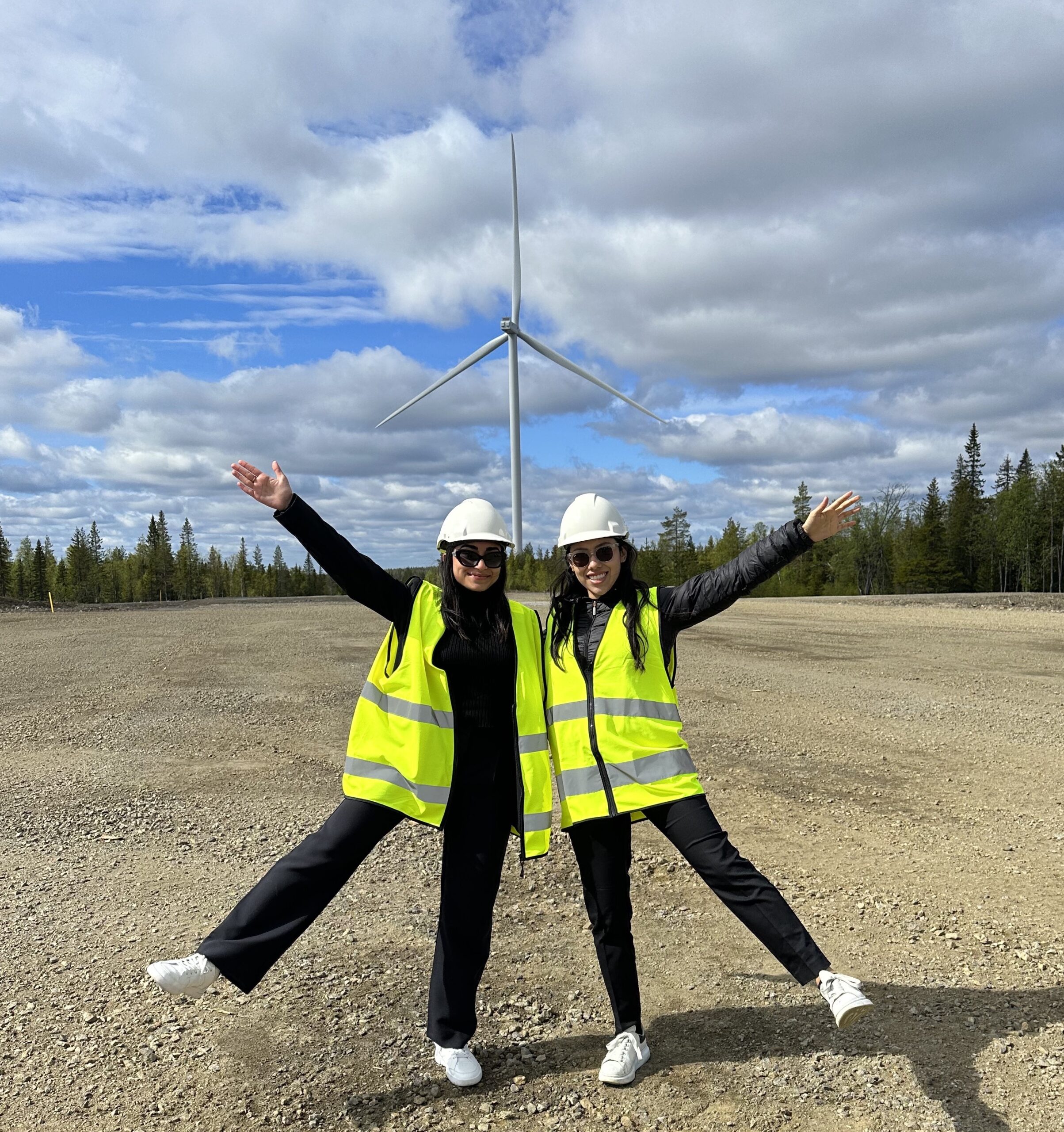
Furthermore, we toured Markbygden 1101, Europe’s largest onshore wind farm. Markbygden 1101 is located in Piteå, north of Skellefteå, where the area is densely covered with trees (and where Dr. Myhr is from!). The area is a prime plot for windmills to collect energy; GE and the Chinese government were notable mentions of those investing in this wind farm. The wind farm collects enough energy that allows for usage to cost those in the region a negative amount, meaning they are saving on their energy consumption. Each windmill produces enough energy per day to run 7 homes for an entire year; this amounts to 903 houses being fully powered for an entire year within one day of running the wind farm. Markbygden 1101 actively engages with the community, involving residents and indigenous communities in decision-making processes. It strives to contribute to the regional economy by creating jobs, stimulating related industries, and investing in infrastructure. It serves as an exemplar of comprehensive sustainability, integrating renewable energy generation, environmental conservation, community engagement, and economic development.
Through our tours of important companies in northern Sweden, our team has learned more about the importance of Swedish sustainability and how it is a goal to strive for full recyclability and usage where possible to minimize waste. Markbygden 1101, the Wood Hotel, and Lundqvist Trävaru are united in this pursuit. Markbygden 1101 achieves this through its vast wind farm, harnessing renewable energy and reducing carbon emissions. The Wood Hotel demonstrates sustainability by utilizing eco-friendly construction practices, such as using renewable wood resources and implementing energy-efficient systems. Lundqvist Trävaru contributes to sustainability through responsible forestry management, ensuring the replenishment and sustainable use of timber resources. Together, these entities embody Sweden’s commitment to sustainability by focusing on clean energy, eco-friendly construction, and responsible resource management. Our exploration of Skellefteå shed light on the region’s deep-rooted commitment to sustainability, surpassing superficial marketing ploys. By embracing wooden construction, undertaking reforestation efforts, and exemplifying efficient planning, Skellefteå serves as a compelling example of how sustainability practices can enhance profitability while fostering environmental consciousness, while bringing a community together to work towards a communal goal of preservation.