Hej!
We’ve just finished up our (technically) second full day in Skelleftea and what a trip it’s been already! Unfortunately, Carrie and I both missed the tours of Northvolt and North Kingdom. Carrie had to retrieve her bag from the airport and I missed my flight and had the pleasure of spending a night in Stockholm a bit early. As much as I would have liked to join the rest of the class on time, it was a unique experience riding an electric scooter around Stockholm as well as my first ever stay in a European hostel.
I was able to join the group in the middle of our tour of the Skelleftea Science Center. It was very neat to learn the government-funding model for startup companies in Sweden as well as the generally more lax management style and patience for innovation. One of the speakers mentioned the need for more American-style entrepreneurs in Sweden, which I found ironic considering the success of Skelleftea’s rapid shift to the sustainability industry.
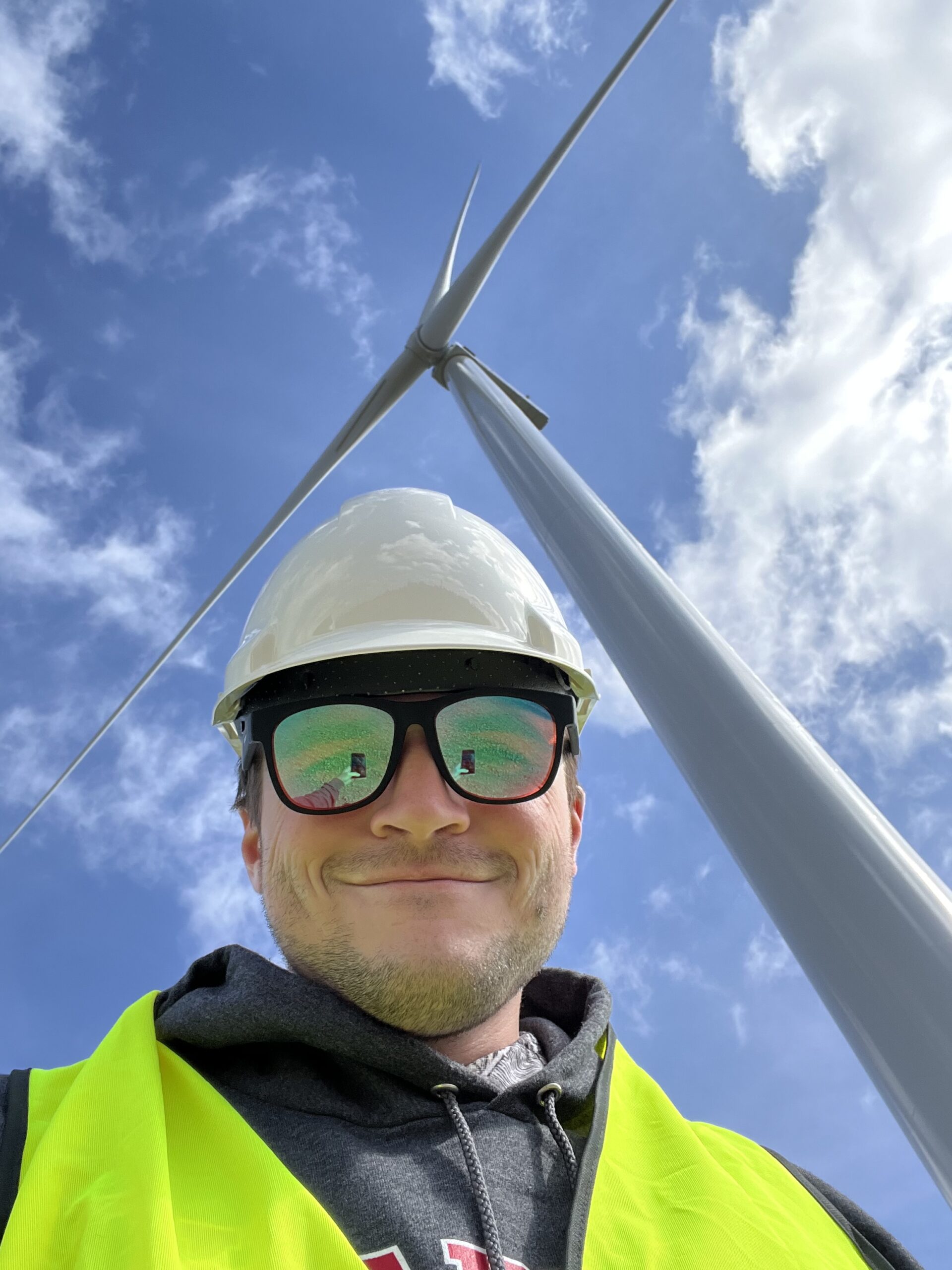
On that note of sustainability, we also got the opportunity to visit Europe’s largest inland wind farm earlier today. I learned that Sweden relies entirely on sustainable energy between hydro, wind, and nuclear power. My biggest takeaway from this excursion, however, is that despite being in Northern Sweden, much of the power the farm generates is going to Norway and Denmark instead because of their superior power grids compared to Southern Sweden. In addition to this, the wind farm was entirely owned by Chinese, German, and American investors. This really demonstrates the globalized nature of business in Scandinavia, as Sweden’s role is effectively property management and maintenance. Also, learning that a single turbine blade is as tall as our 20 story hotel is insane.
Our final business visit of today was to Lundqvist, a custom pre-built home manufacturer. I found it very intriguing the differences in their business model compared to one in America. For one, zoning/permitting across Sweden is much more universal than it is in America. In the US, their software would have to be significantly more complicated to account for these tighter restrictions which are essentially different from city to city. Additionally, I found it strange being allowed to enter their shop floor with all kinds of sawdust and power tools laying around, but there was no need for PPE. I know in the states, OSHA would have a field day with a place like this, and at the minimum we all would have been required to enter with safety goggles. In fact, some of the employees actively working weren’t using masks, goggles, gloves, etc. Maybe socialized healthcare means less caution in the workplace. Another thing I found interesting is that their structural walls were held together using wood screws. I’ve built partial houses in the US before, and homes there are required to be built with nails because they bend rather than shear in the case of a natural disaster, so your walls won’t just come falling down. Again, these disasters probably aren’t even a concern in Sweden. Although these operational differences are all minor, they immediately registered with me, and I’m excited to see how else Scandinavian business culture varies from what I’m used to.
Cheers! Talk to you from Stockholm soon.
-Jonathan